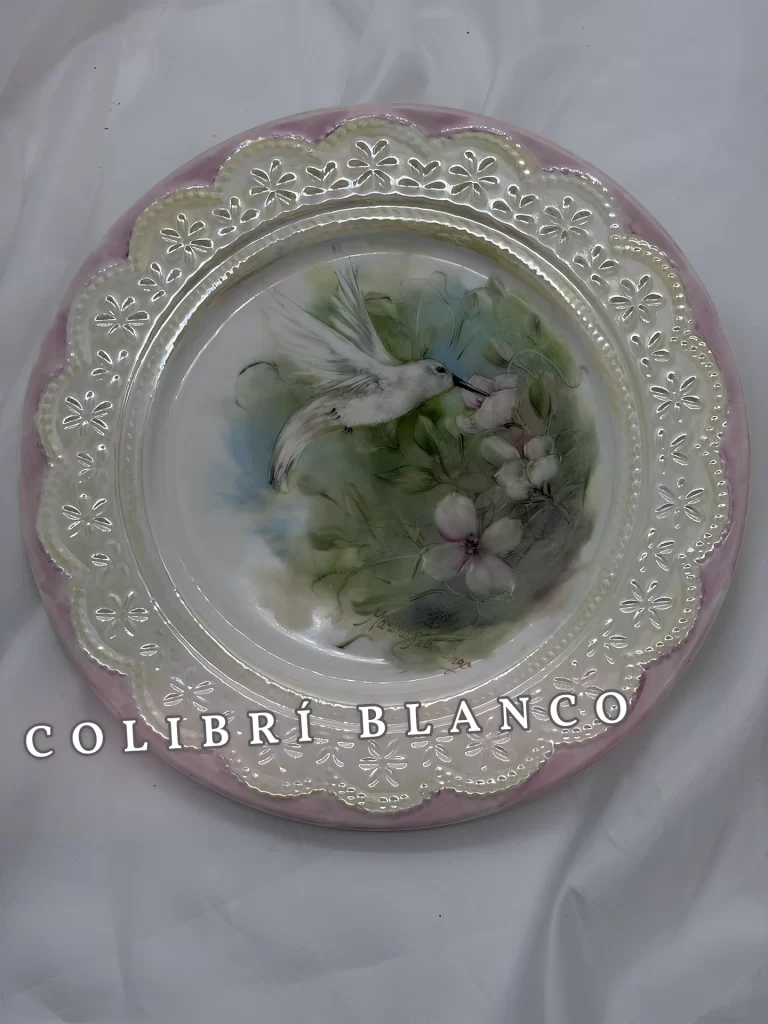
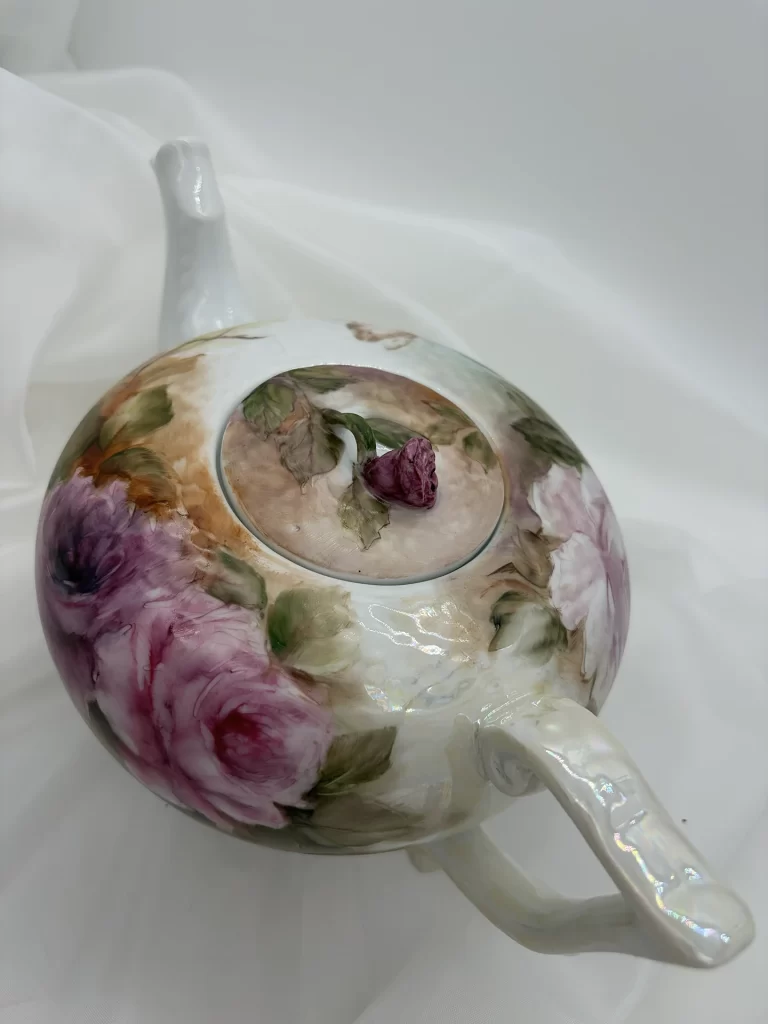
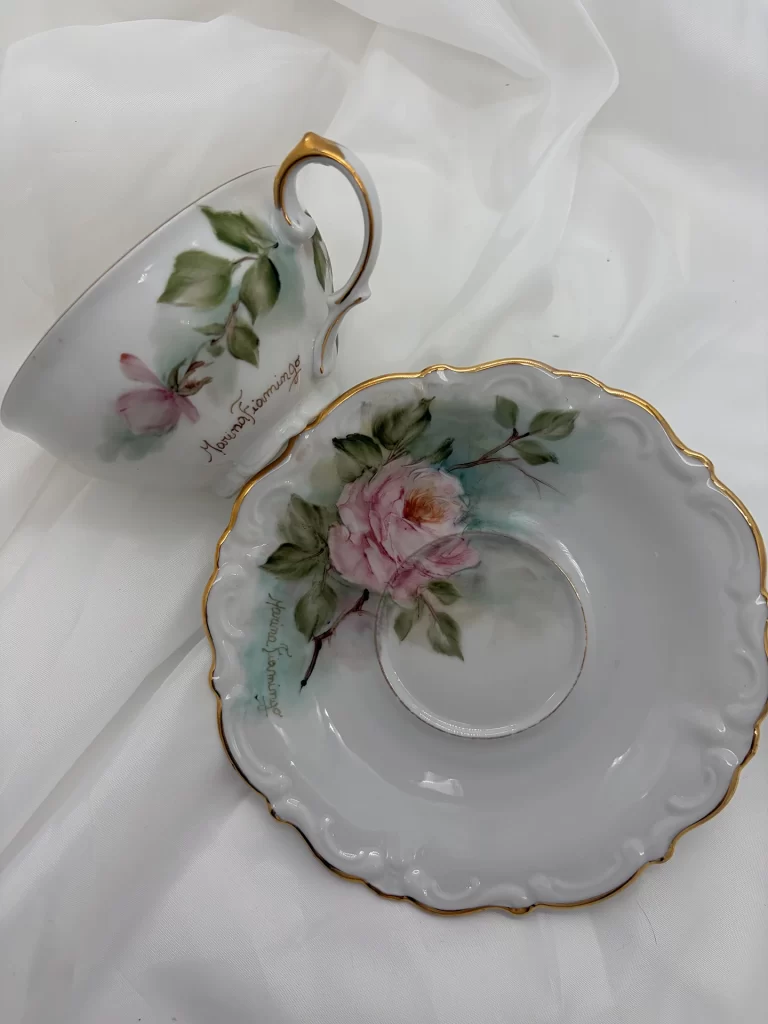
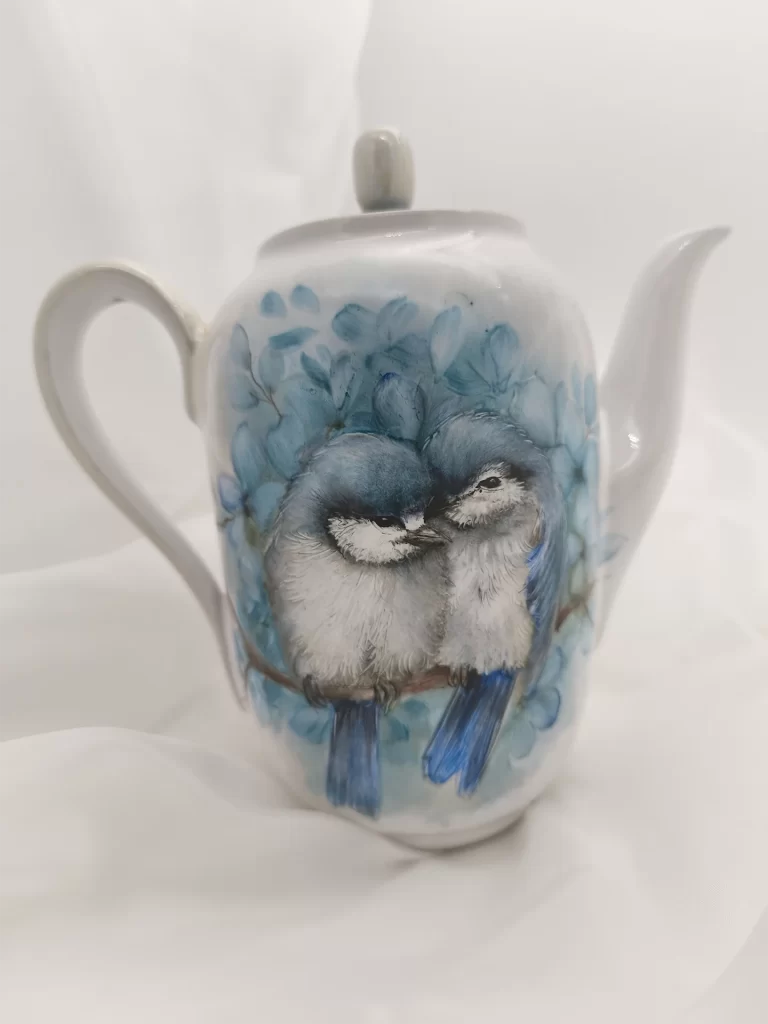
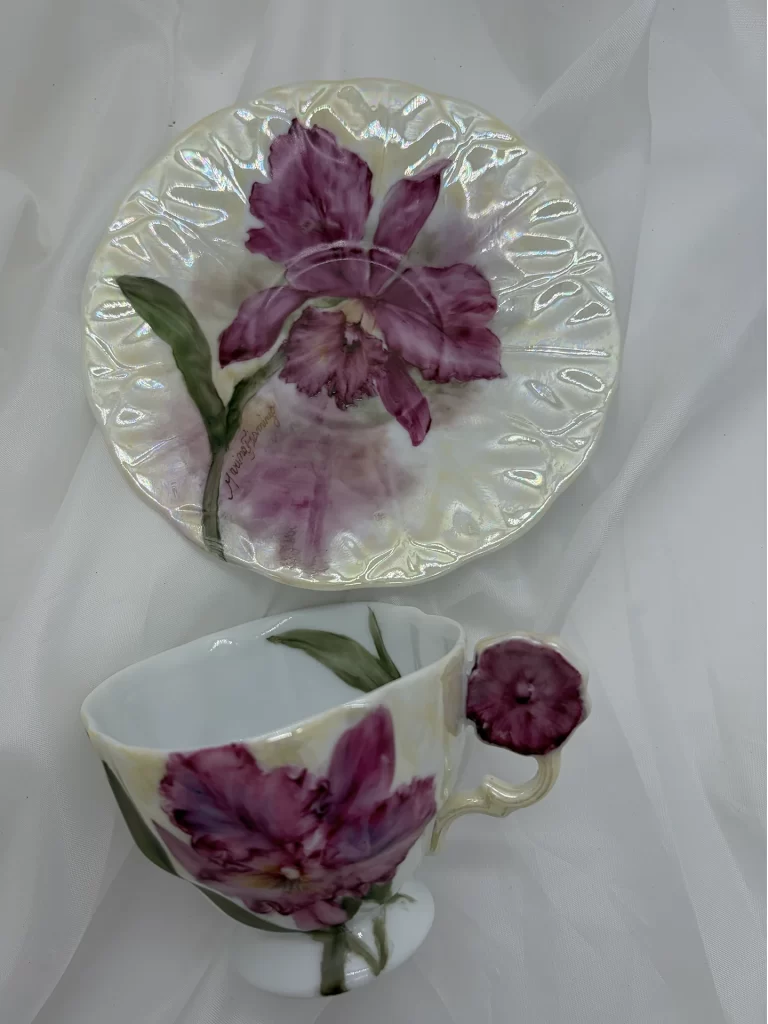
I discovered the master technique that I frequently use to give my works a tactile three-dimensionality that transcends flat painting and challenges the limits of porcelain.
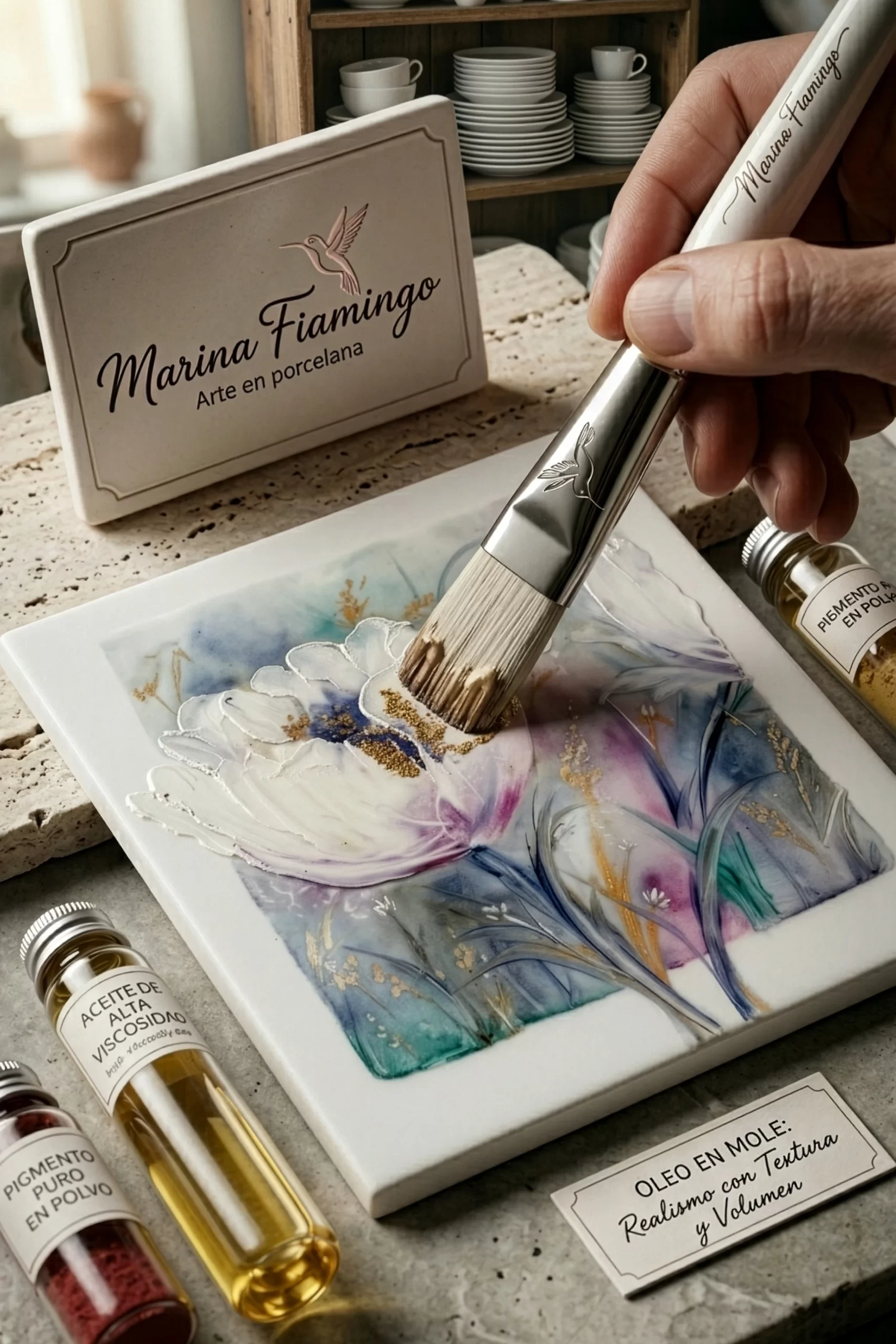
Entering the world of oil in mole It's about understanding that paint doesn't have to be a two-dimensional layer. This technique, which is the hallmark of our Atelier, allows us to play with the density of the mineral pigments to “sculpt” the light. Unlike traditional glazes, here the paint has body, weight, and a tactile quality that can be felt even before firing. It is the ultimate technique for those who want porcelain to move beyond being a cold object and acquire the vibrancy of an organic, living work. The foundation of oil on mole lies in the preparation of the paste. We are not aiming for a watercolor-like paint, but rather a mixture with just the right viscosity that allows the brush to leave a raised impression. This density is achieved by carefully balancing the powdered pigment with high-quality resinous oils. By mastering this mixture, the artist gains the ability to create planes of light that physically protrude from the piece, granting a depth that the eye perceives as a striking three-dimensional realism.
Creating Textures You Can Feel
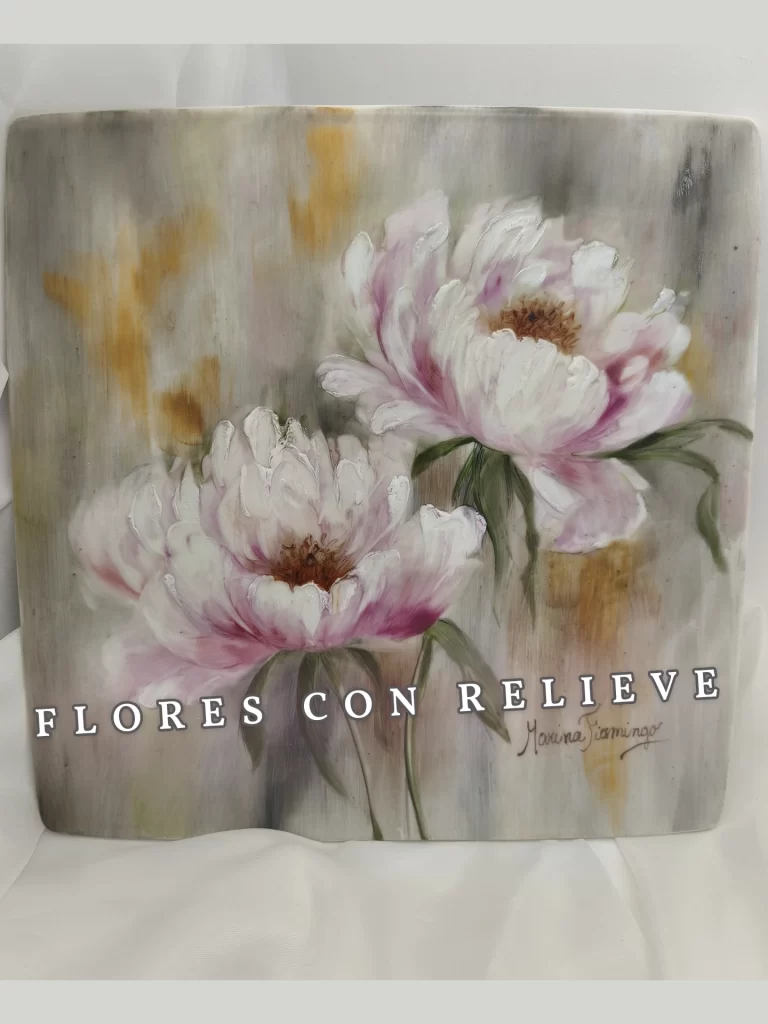
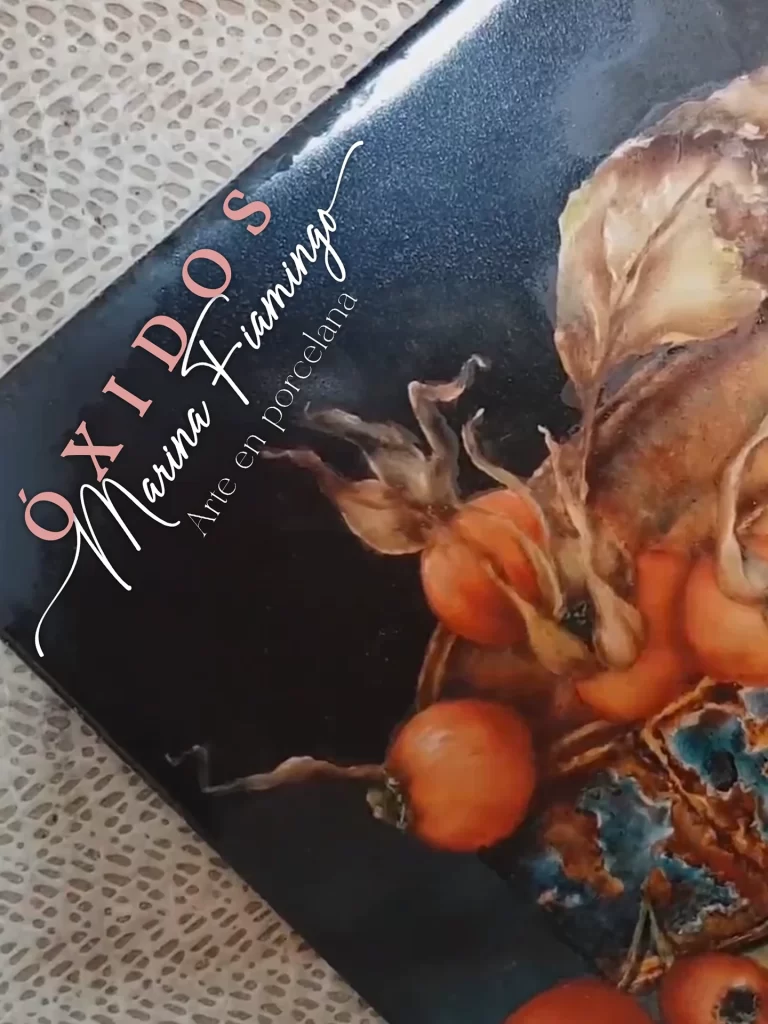
What makes oil painting in mole unique is its ability to depict complex textures with astonishing fidelity. From the roughness of tree bark to the velvety smoothness of a withered rose, This technique allows us to imitate nature in an almost sculptural way. In our pieces of botanical realism, The oil paint in the glaze is what gives it that unique character, allowing each petal or each vein to have its own physical presence under the vitrified enamel.
The Handling of Light and Deep Shadow
Thanks to the thick layer of paint, this technique allows for much deeper shadow values than any other. We can work "wet on wet," blending colors with exceptional chromatic richness without losing the structure of the brushstroke. This depth is vital for achieving the mastery in portraiture, where the volumes of the face need that solidity that only a body-based paint can provide, allowing the light to bounce off the created reliefs.
Behavior in the Oven
One of the technical marvels of oil painting in molten glass is how it transforms during vitrification. With a higher pigment load, the final sheen is sumptuous and deep. However, it requires a precise understanding of the burning temperature To ensure that the relief doesn't flatten from excessive heat or bubble from lack of ventilation, we teach how to balance this load in the workshop so that the piece maintains its elegance and durability, guaranteeing that the relief is an integral part of the porcelain.
An Invitation to Tactical Mastery
I invite you to step outside the comfort zone of flat painting. Oil painting on canvas opens up a world of expressive possibilities where your hand not only paints, but also builds. It's a technique that requires... brushes with good rebound and a mind open to observing the world in three dimensions. Come and discover the pleasure of seeing your work come to life and take shape in each session, transforming a simple plate into a timeless, original sculpture.
Frequently Asked Questions about Textures and Volume
Find here the answers to the most frequently asked questions I receive about this publication.
Is oil painting on a mole surface more difficult than conventional painting?
It requires a steeper learning curve because you have to learn to manage the viscosity of the material, but once you master brush loading, it offers a creative freedom that flat paint cannot match.
What oils are used for this technique?
We use oils with more body and resin, often called closed or thick oils, which allow the pigment to maintain its shape without spreading onto the porcelain.
Can it be combined with other techniques in the same piece?
Absolutely! We often use soft glazes for backgrounds and reserve thick oil paint for the main subject, creating a contrast of textures that enhances the realism of the work.
How many firings does a piece require using this technique?
Depending on the complexity of the relief, it may require between two and four firings. The first establishes the basic volume, and the subsequent firings refine the details and the depth of color.
Display currency was reset to the store default because the selected currency would show amounts as zero. Please update the exchange rate and Number of Decimals in Multi Currency settings.