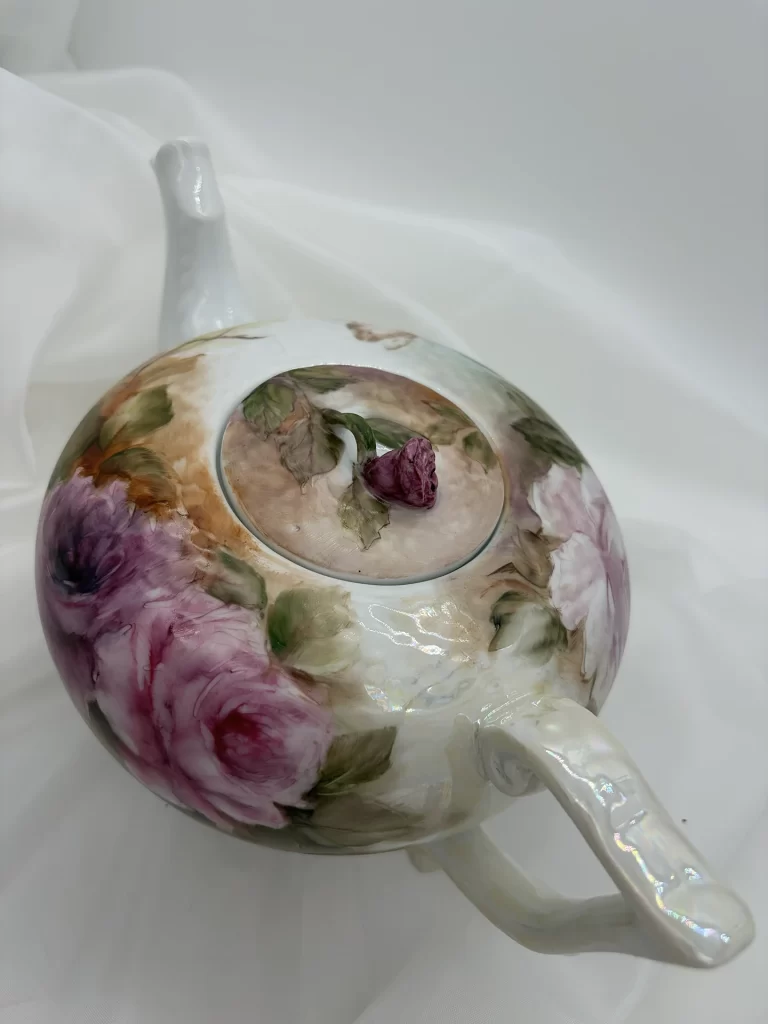
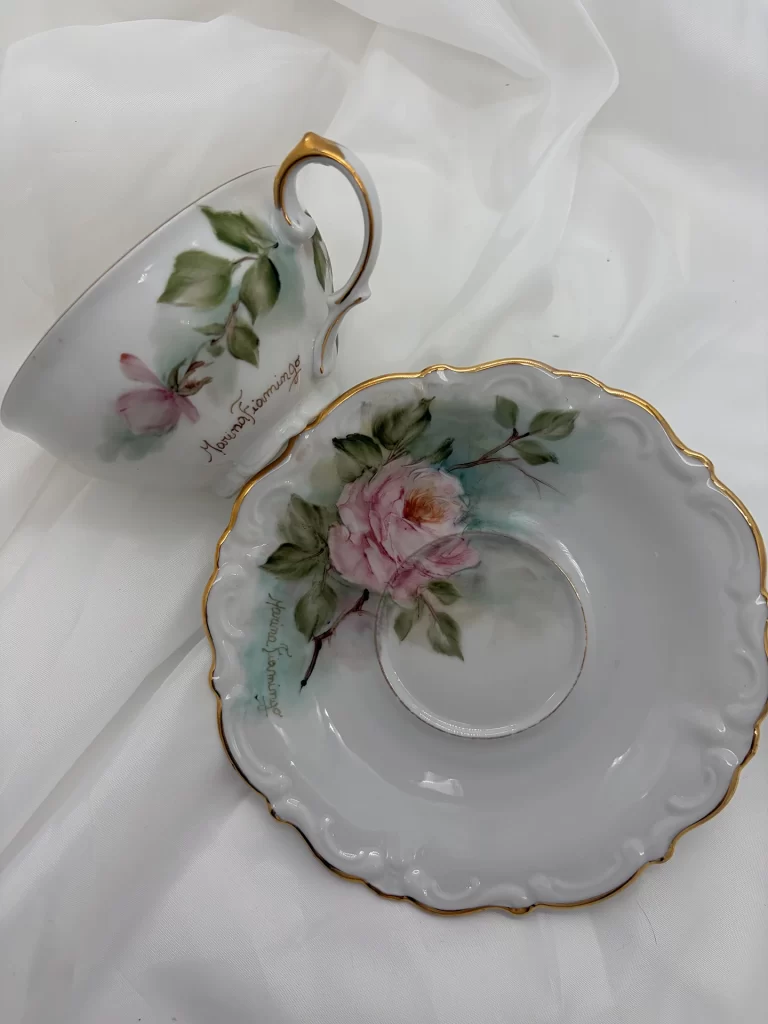
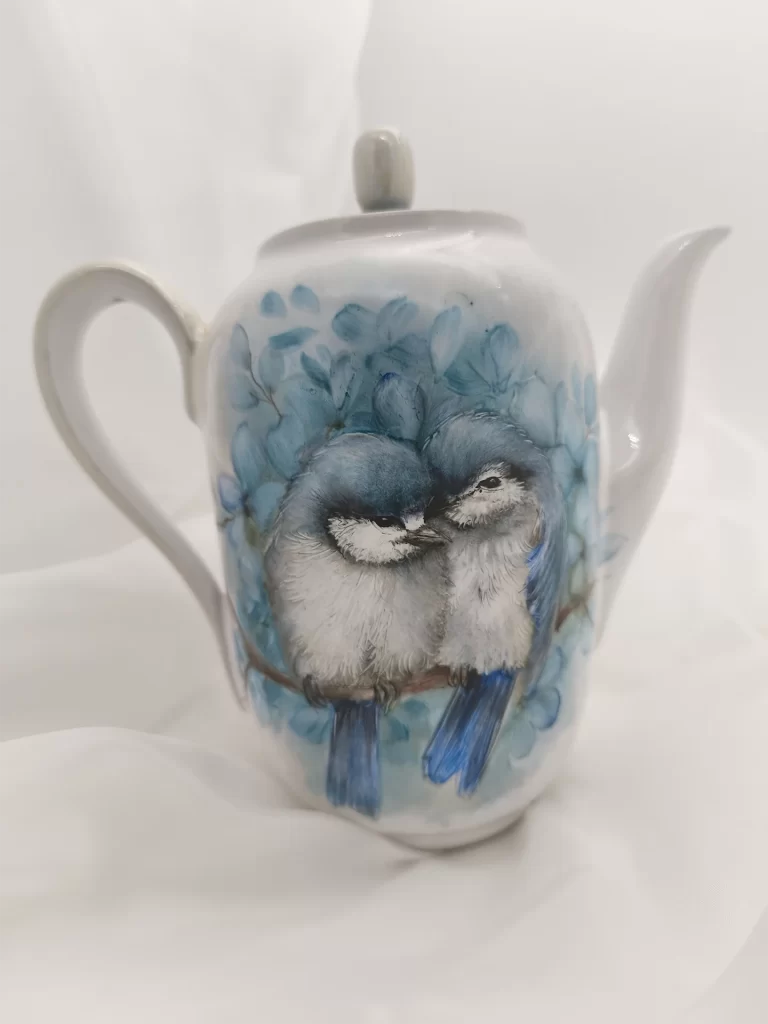
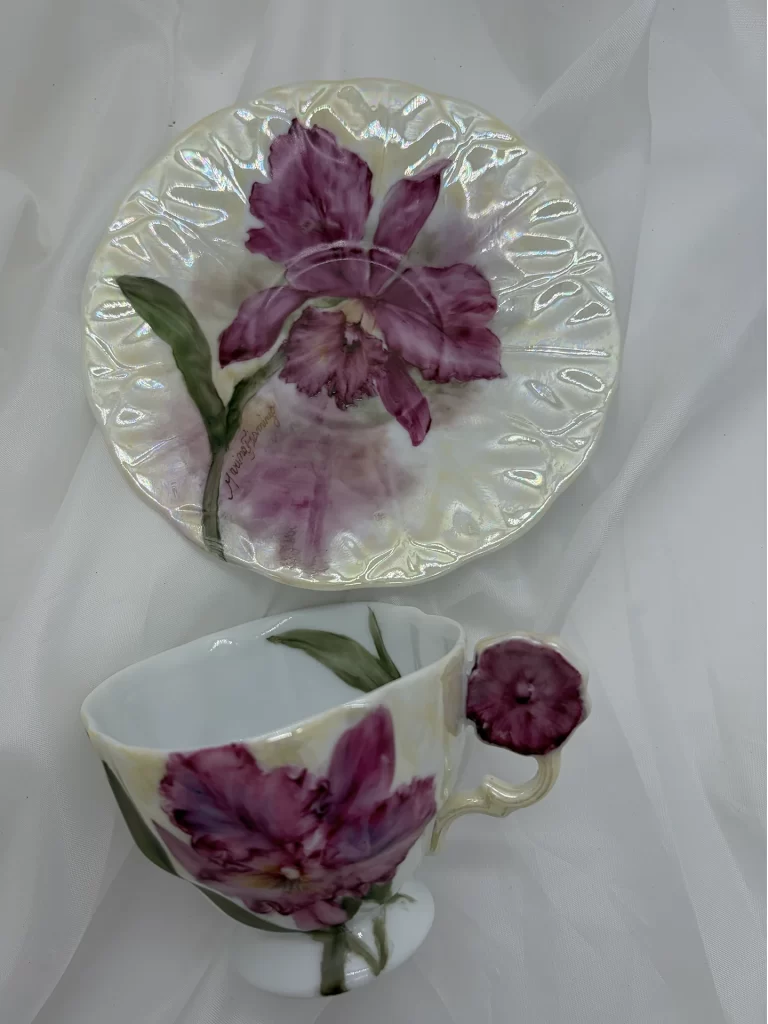
Creating with the art of patience in porcelain, I have learned that cracks are not the end of a piece, but the beginning of a much deeper story. Sometimes, the kiln's fire imposes its own will and delivers a fractured work; in that instant, my task as an artist is to decide whether to see it as a defeat or an opportunity. "The Force of Nature" was born precisely from that break, transforming a technical accident into a metaphor for our own capacity to heal, be reborn, and flourish even more strongly in the very places where we were broken.
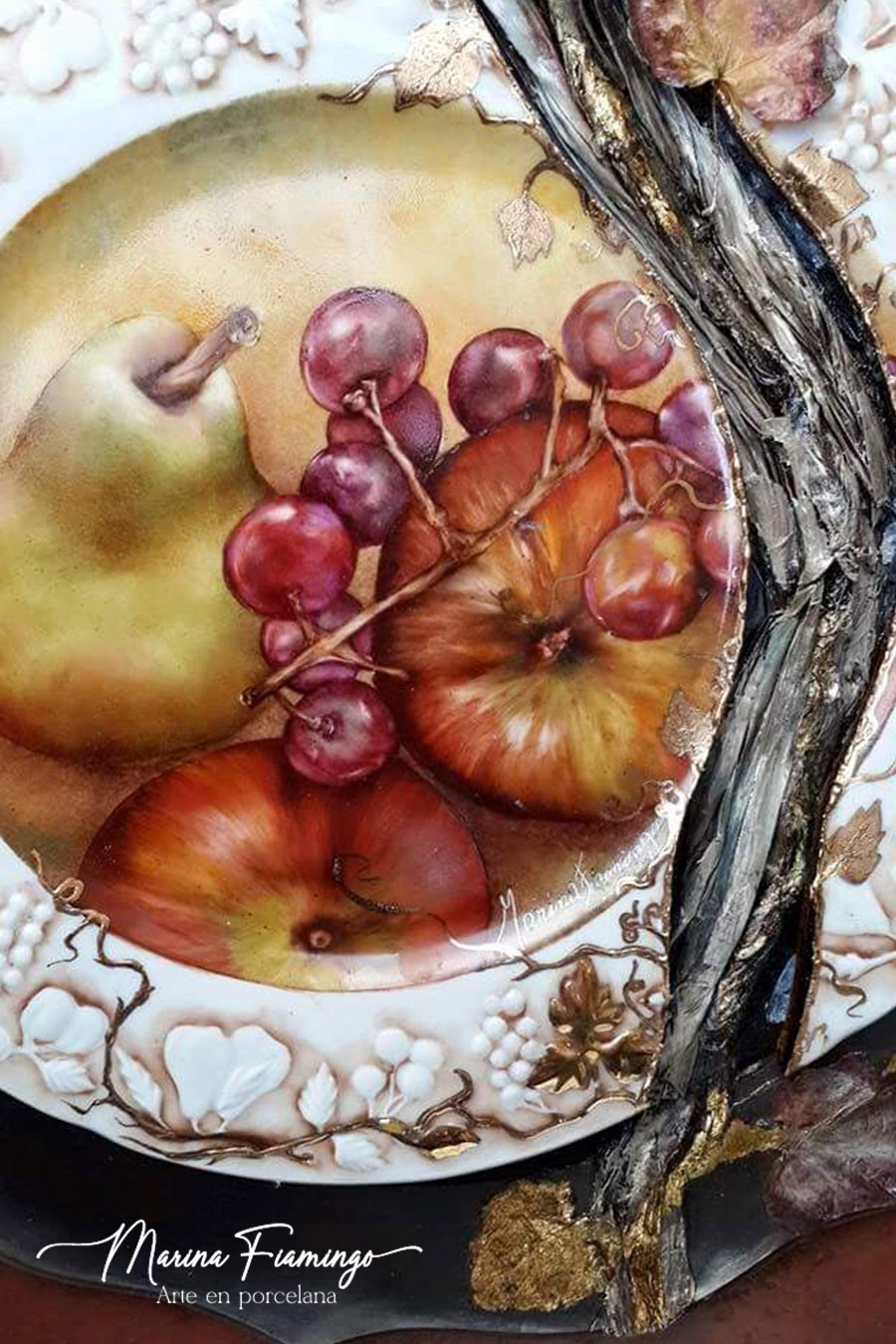
This work, originally created in 2015, transcends the traditional concept of decoration to become a symbol of resilience. The porcelain plate, fractured by the intensity of the heat, ceased to be a smooth surface and transformed into the path from which the Vine emerges. By applying the technique of drying oil, I used v220 and clove (with closed oil), I was able to work the texture of the grapes and leaves with a delicacy that contrasts violently with the hardness of the fracture.
A Process of Acceptance and Overcoming
The grapevine that seems to "break" the plate as it grows represents the unstoppable will to live. It is that organic force that doesn't ask permission, but rather forces its way through adversity. In the workshop, this reminded me that the greatest beauty lies not in absolute perfection, but in accepting and overcoming our own imperfections.
Mixed Media: Blotting Paper and Gold Details
To elevate the narrative of this piece, I decided that the technique should be as complex as the message I wanted to convey. I used drying oil to achieve the desired volume of the fruit, allowing each grape to have those intense colors and the characteristic shine dand the painting done with these drying oils. However, the final touch of authority was provided by the gold details.
The gold in the porcelain is not merely an embellishment; it is the material that honors the scar. By illuminating the edges of the Vine and the details of the leaves, I managed to capture the light within the work, symbolizing the abundance that emerges after the storm. It is a piece that invites touch, inviting you to feel the difference between the coldness of the broken porcelain and the warmth of the hand-painted relief.
As in my black and white works, where the management of light is fundamental (as you can see in my analysis of the Oil on Mole in Black and White), here the contrast serves to highlight the life that emerges from the fracture.
The Support as an Extension of the Work
“The Force of Nature” doesn’t end at the edge of the plate. To complete the metaphor, I designed a wooden container stand, also painted with oils. In this space, the Vine continues its journey, constructed with painted paper tape and gold leaf.
This expansion of the work beyond the traditional medium reinforces the idea that life cannot be contained. oil in mole The gold leaf on the plate and the gilding on the outer structure create a visual dialogue where humble and noble materials merge to celebrate survival. It is, in essence, an ode to artistic and personal resilience.
The Legacy of Imperfection
Looking at this piece today, years after its creation, reaffirms my philosophy as a guide and artist. In a world that demands perfection and productivity, porcelain teaches us the fragility and strength of patience. Every time I apply a glaze of color On a surface that has been through fire, I am reminding myself that what is broken can be restored with something much more valuable: purpose.
FAQs about Drying Oil
Find here the answers to the frequently asked questions I receive about the Drying Oil Technique and the resource of creating details in gold.
What happens if a piece of porcelain breaks in the oven?
Although the initial instinct is to discard it, in my art studio, we see the break as a new canvas. Through the combination of mixed media techniques and the application of gold, the fracture is integrated into the narrative of the work, increasing its emotional and artistic value by transforming it into a unique piece.
How is gold applied in the porcelain technique?
Gold is applied in the final stage, generally after the layers have been fixed. paint in previous firings. It is a precious material that requires a specific firing to vitrify and fuse with the porcelain glaze, providing an eternal shine that does not change over time.
What is the difference between oil on canvas and oil on wood?
He oil in mole For porcelain, he uses special oils that do not air dry and mineral pigments that only reveal their final color after being fired at 780°C. Oil on wood, like that used on the support of this work, is a traditional oxidative drying technique that allows for different textures but does not require firing.
What is the meaning of the Vine in this porcelain work?
The vine is a universal symbol of abundance, life, and transformation. In this piece, it represents the metamorphosis of resilience: the ability to use life's cracks as channels for something new, nourishing, and beautiful to emerge, demonstrating that we can flourish in adversity.
Display currency was reset to the store default because the selected currency would show amounts as zero. Please update the exchange rate and Number of Decimals in Multi Currency settings.