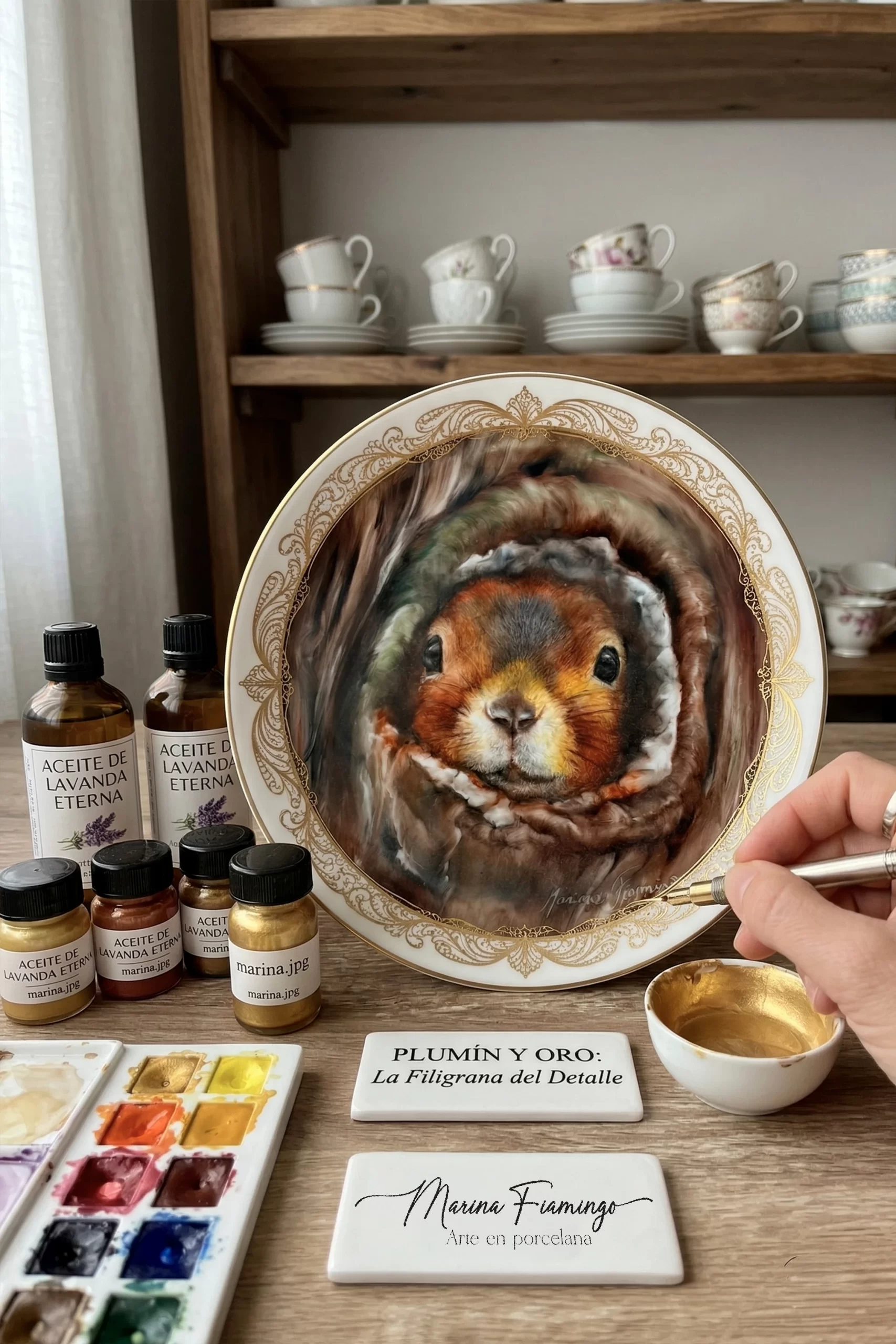
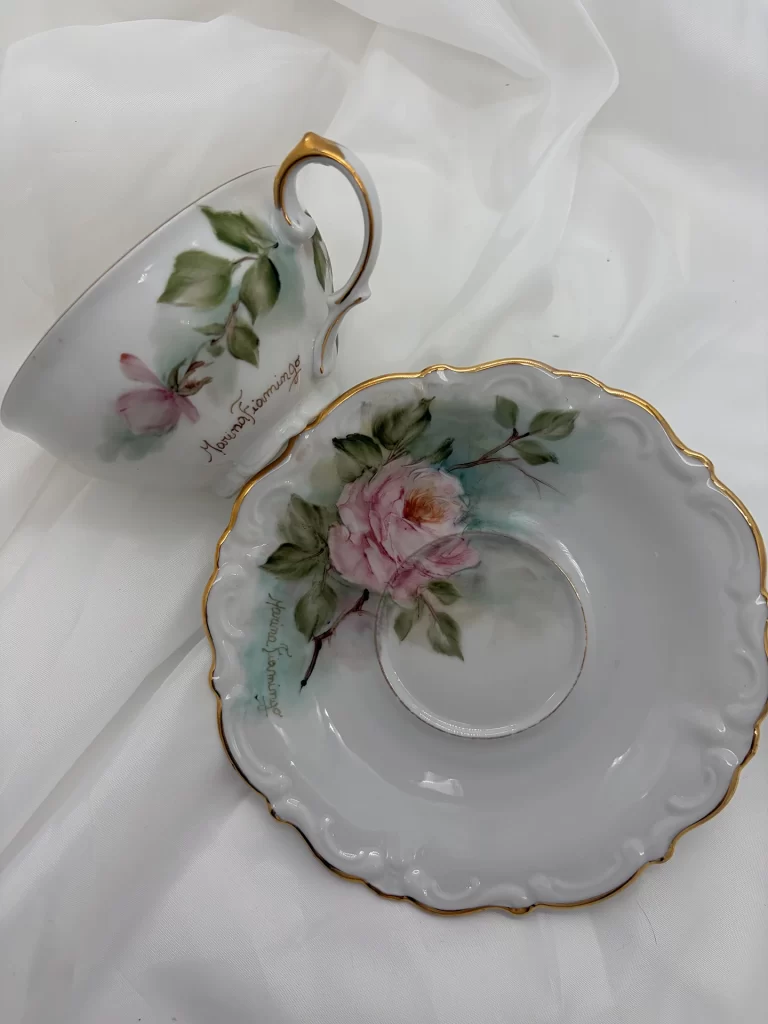
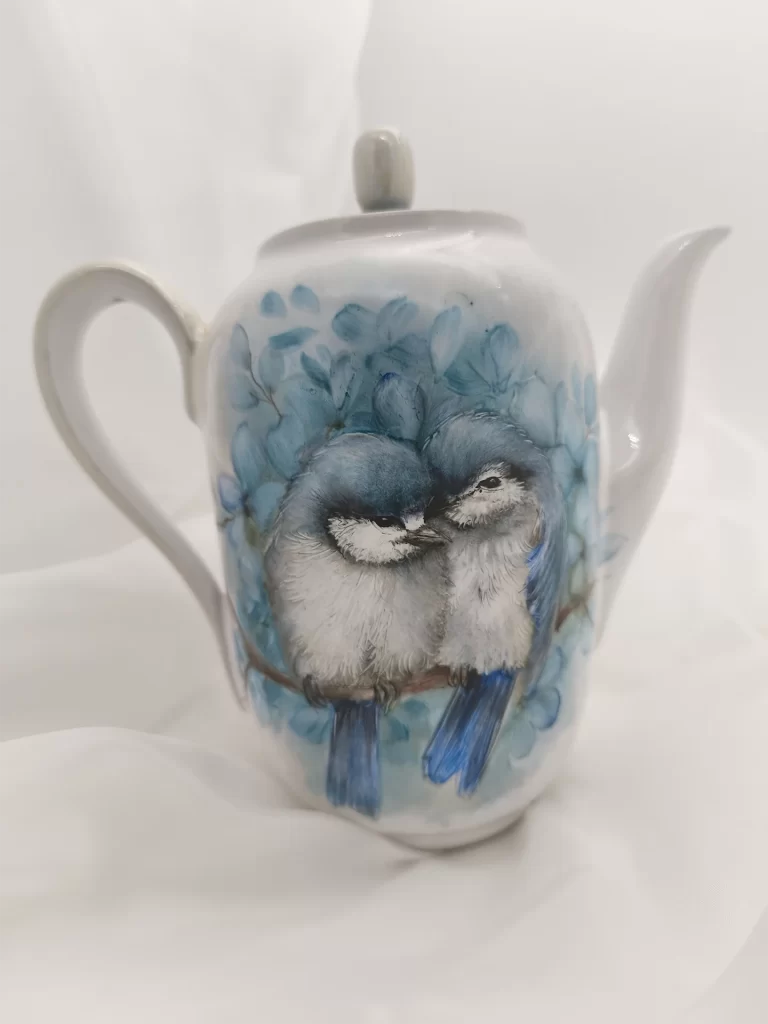
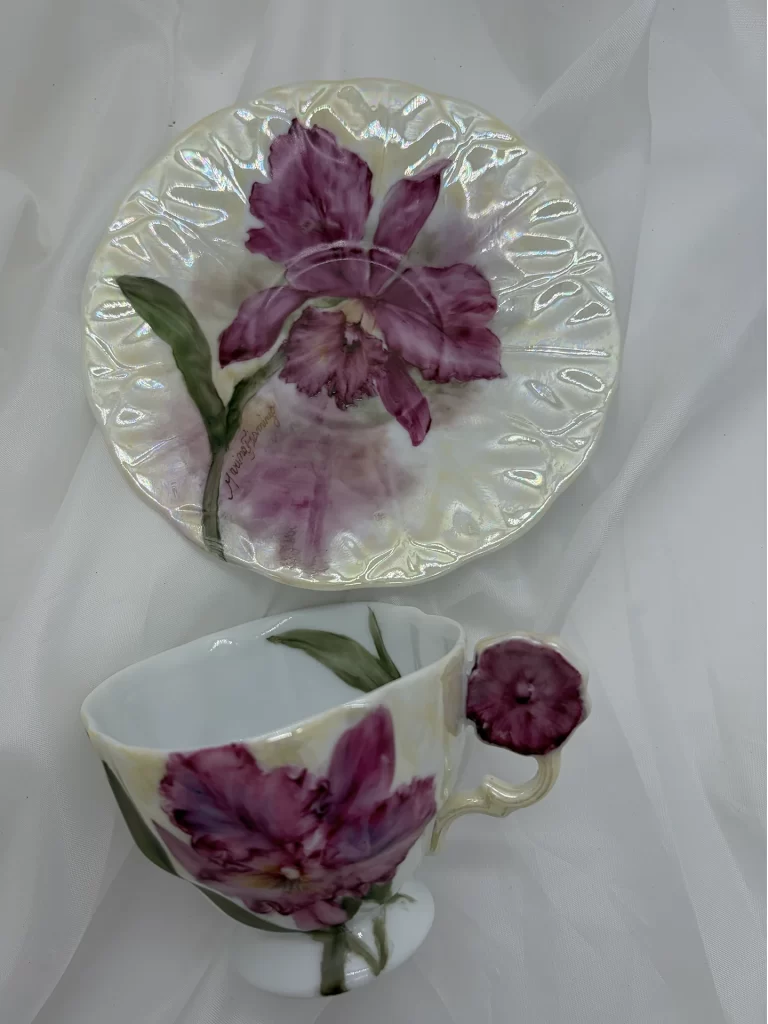
The precision of the stroke meets the nobility of the metal; I discovered how the use of the nib and liquid gold transforms an author's piece into a collector's jewel, from the filigree of the porcelain detail
In the world of third firing, it is the detail that tells the true story of the work. While large areas of color define volume, it is the fine lines that provide identity and character. The use of the nib, inherited from classical calligraphy, allows us to achieve a level of definition that even the finest brush could only dream of. When we add to this tool the application of precious metals like gold, We enter a dimension of technical luxury where every dot and every filament becomes a flash of vitrified light, elevating porcelain to an unparalleled level of exclusivity. The nib (or mapping pen) is the precision tool par excellence in the Atelier. Unlike a brush, its metal tip allows us to control the flow of pigment with absolute rigor. It is indispensable for creating the most demanding anatomical details in the mastery of portraiture, such as eyelashes, eyebrows, or fine lines. By loading the nib with a mixture of pigment and low-viscosity oils, we achieve a stroke that seems like a whisper, but after burning, remains firm and sharp forever.
Liquid Gold: The Alchemy of Eternal Brilliance
Painting with gold is an exercise in faith and technical knowledge. The liquid gold we use is a suspension of real metal that, before entering the kiln, looks like a dark, opaque varnish. It is in the third cooking Where the magic happens: the oils disappear and the 18 or 24-karat gold emerges with its characteristic splendor. Applying gold with a nib pen allows us to create filigree, borders, and jewelry details that appear woven onto the enamel, giving the piece a distinction that only precious materials can offer.
The Filleting Technique and the Freehand
The filigree—that perfect golden line that borders a dish or frames a portrait—requires a surgeon's steady hand and a discipline of observation Constant. In our workshop, we encourage the freehand use of the nib so that the design is not a mechanical repetition, but an extension of the work's rhythm. The key lies in the preparation of the gold ink; it must have the exact fluidity so that the nib doesn't clog or drip, allowing the hand to glide with the confidence that only years of practice and good materials can provide.
Synchronicity between Metal and Color
A common mistake is to view gold as an isolated element. In Marina Fiamingo's works, gold interacts with the mineral pigments To highlight highlights or create dramatic contrasts, we can use the nib to "draw" with gold over previously painted areas, creating patterns of light that capture the viewer's eye from different angles. This technical precision requires understanding drying times and firing temperatures, as precious metals are often the "final touch" of the artwork, the finishing touch that completes the creative process.
Conservation of the Vitrified Jewel
A piece that combines the intricate detail of a nib with the richness of gold is a work that defies time. The vitrification process ensures that these microscopic lines will not fade, but like any jewel, it requires careful maintenance. Avoiding abrasives and treating the piece with the delicacy its creation process demands is essential for its brilliance to remain intact for generations. I invite you to master these precision tools; you will see how your attention to detail expands, allowing you to create works with a level of sophistication that only the union of metal and porcelain can achieve.
FAQs about Nib and Gold
Find here the answers to the most frequently asked questions I receive about this publication.
What type of oil is best for loading the nib with pigment?
To ensure the nib flows smoothly, we recommend very light, slow-drying oils, such as lavender oil, or specific nib mediums. The mixture should be thinner than brushstrokes, similar to the consistency of India ink, so that the metal nib can "write" on the porcelain glaze continuously without scratching the surface.
Why does gold sometimes come out dull or "burnt" after the furnace?
The opacity of gold is usually due to two factors: a layer that is too thin and evaporates in the heat, or an excessively high firing temperature that alters the metal's properties. In the workshop, we teach that gold requires a specific firing temperature, generally lower than that of background colors (around 720°C to 780°C), to ensure that the characteristic mirror-like luster of designer porcelain remains flawless and luxurious.
Can you use a nib on paint that hasn't been burned yet?
We don't recommend this, as the metal tip of the nib would lift the wet or fresh paint from the background. The correct technique is to burn the base colors first. third cooking Then, on the now vitrified and cooled surface, apply the details with a nib or gold leaf. This ensures a crisp line, no unwanted color mixing, and that each layer of detail maintains its absolute definition.
How do you clean the nib so that it doesn't get ruined by the gold?
The nib should be cleaned immediately after use with alcohol or a thinner specifically designed for resinous oils, ensuring that no dried gold residue remains in the nib groove. A nib clogged with dried metal will lose its flexibility and precision. Storing pens dry and protected from moisture is an essential maintenance practice that guarantees your precision tool is always ready for the next stroke of gold.