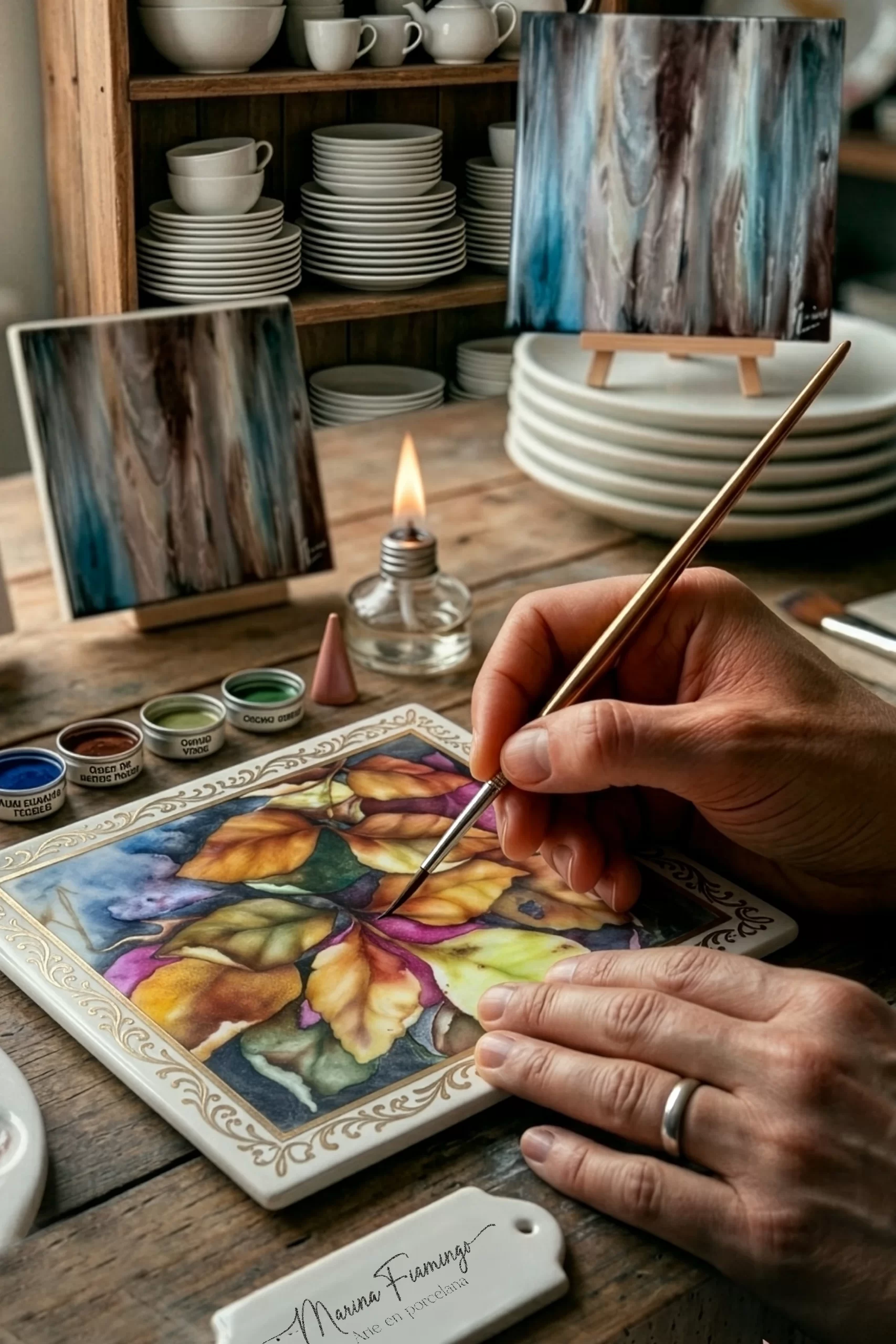
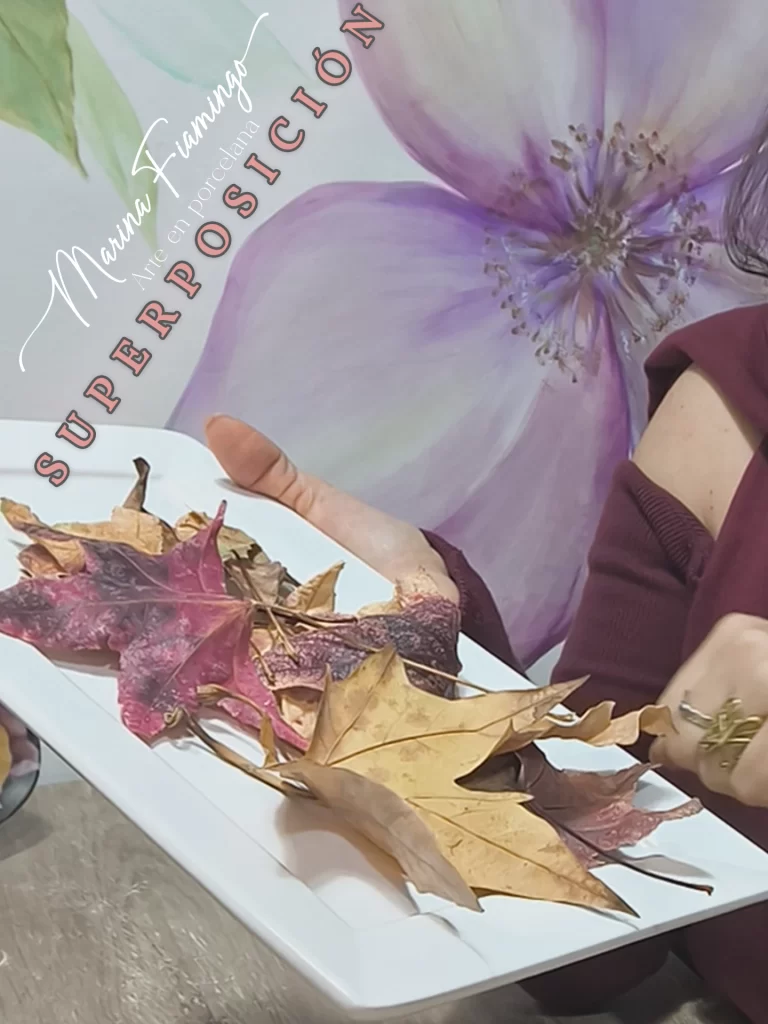
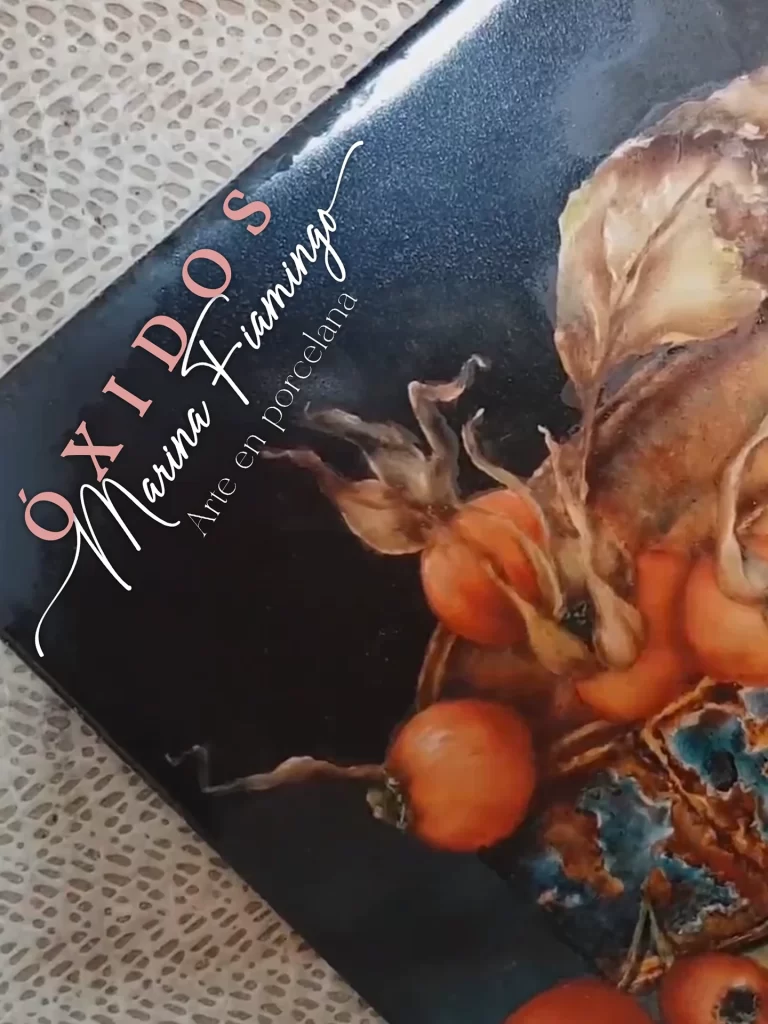
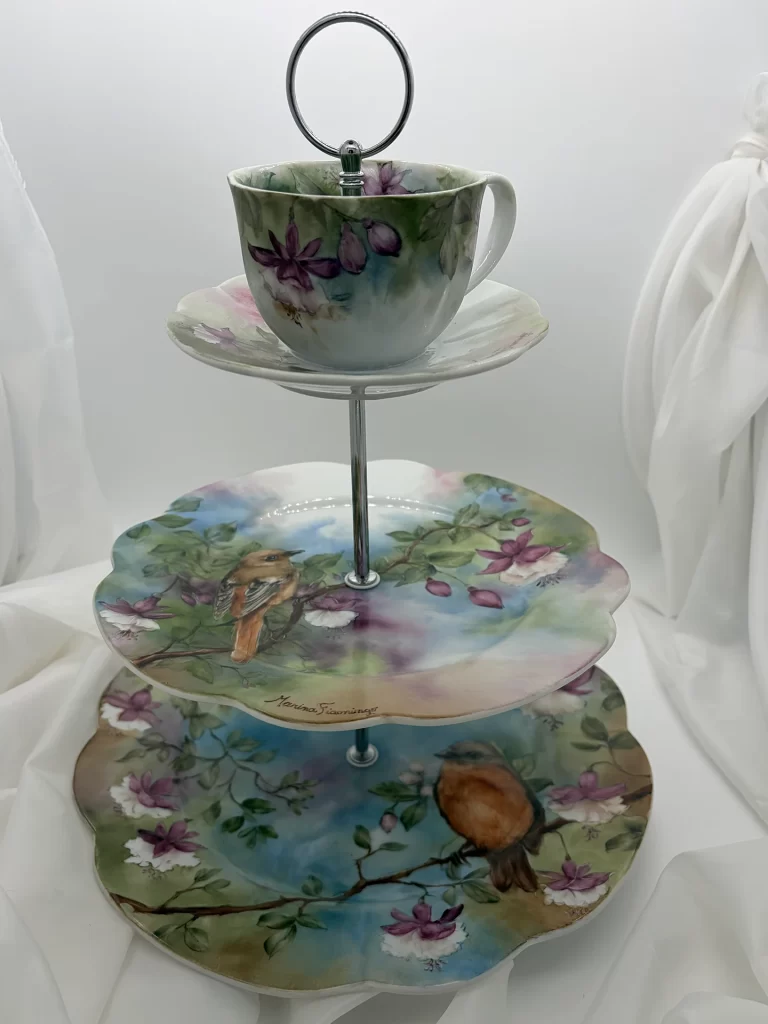
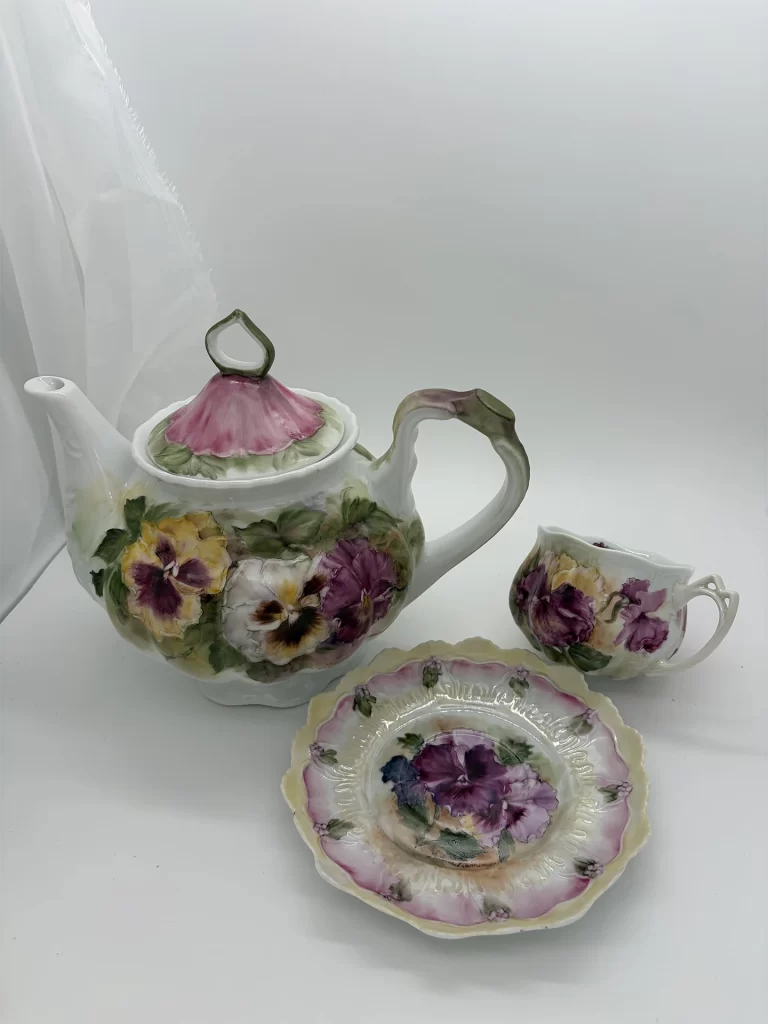
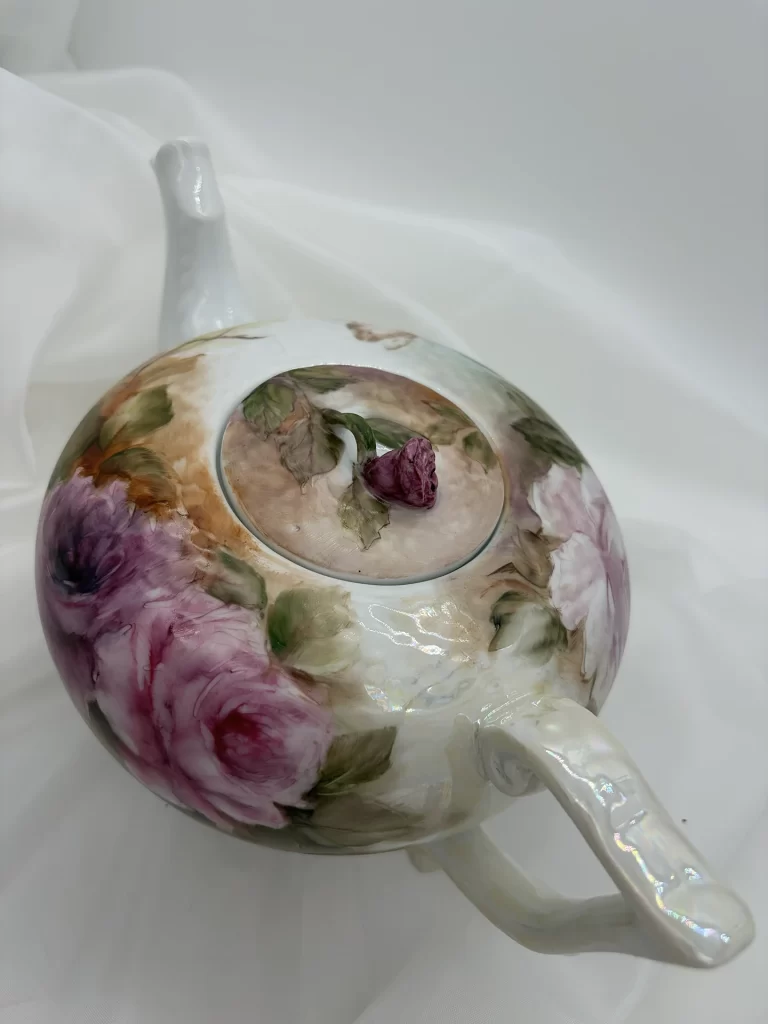
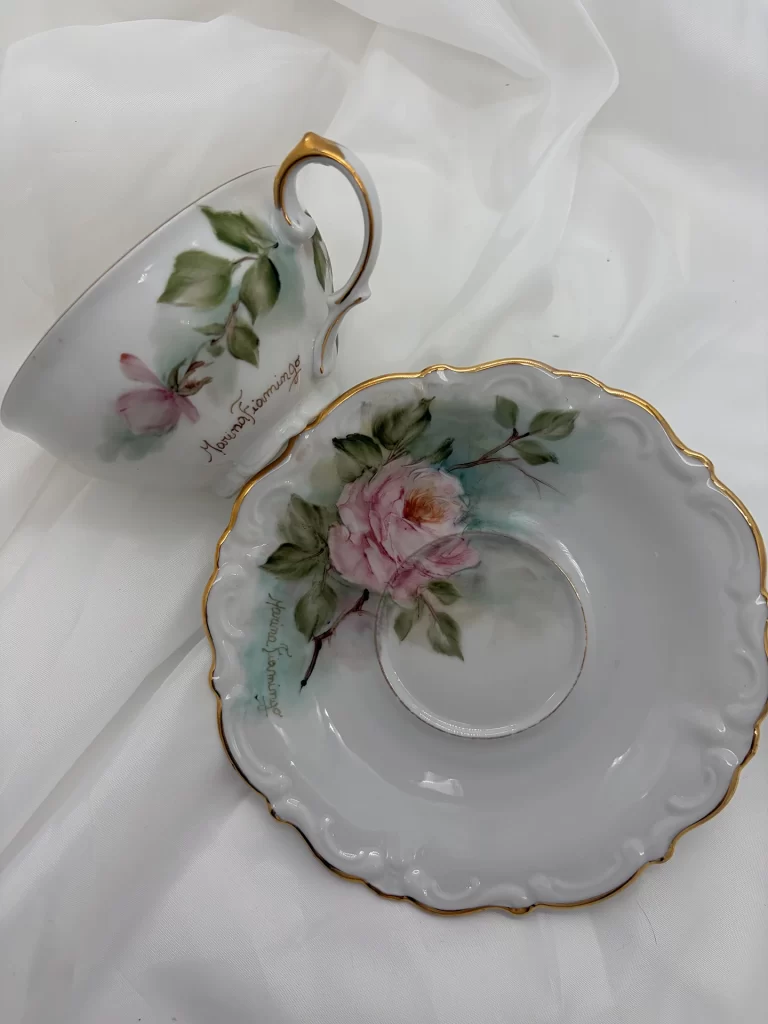
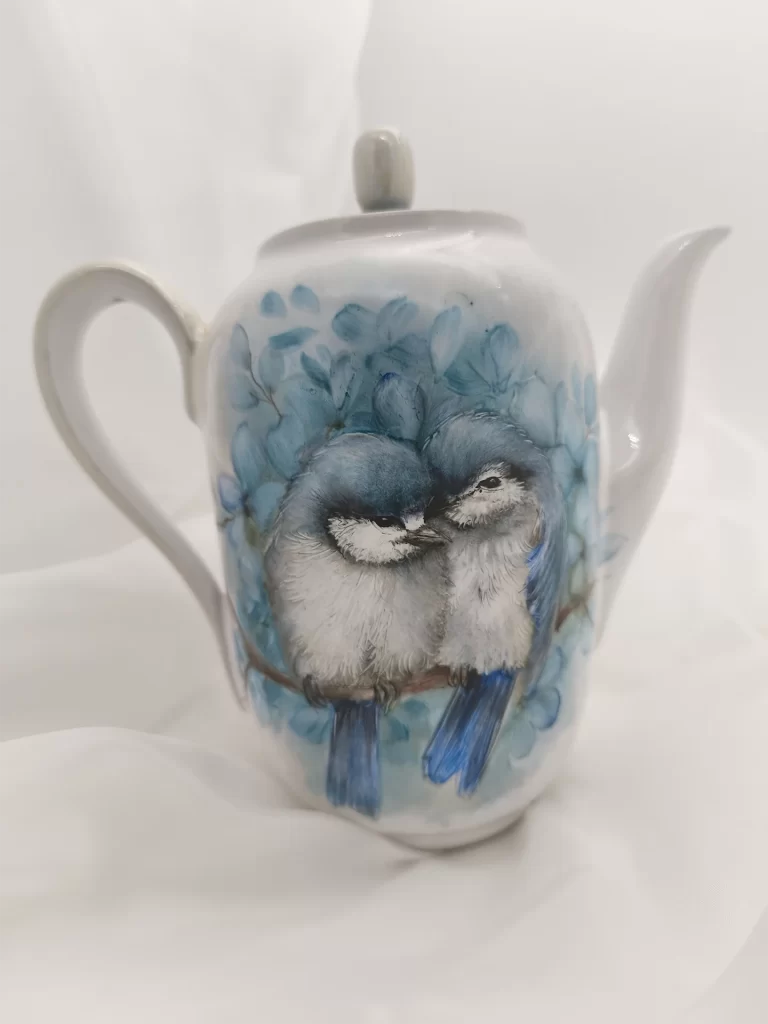
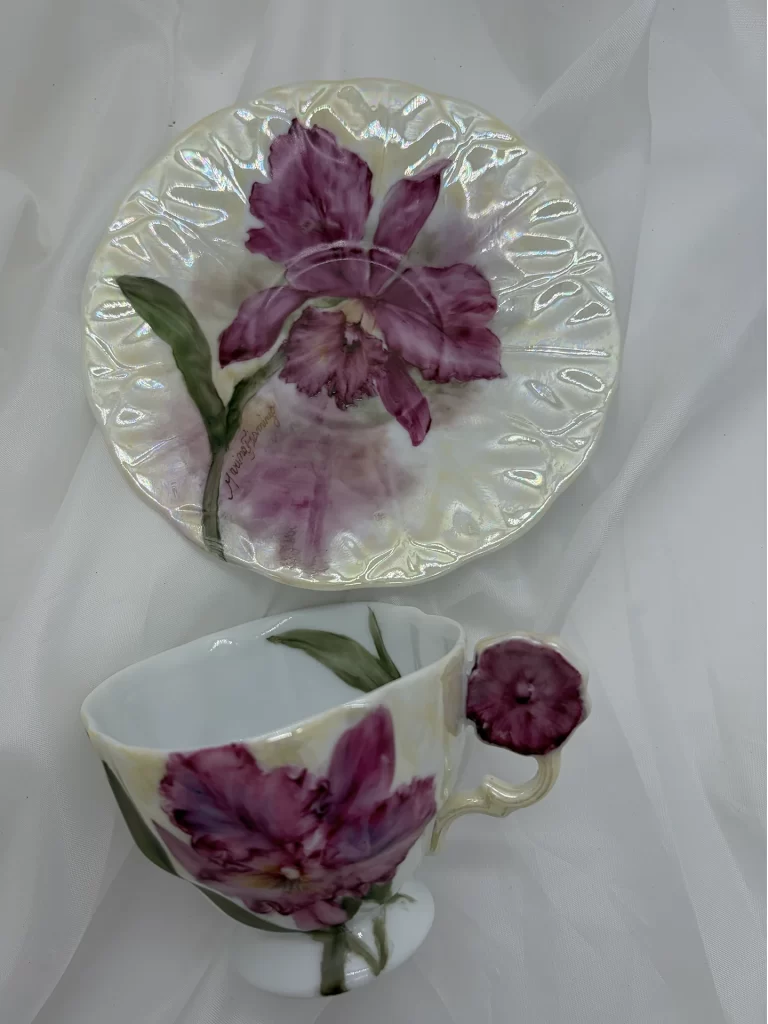
There is a fire that can immortalize art, and from vitrification we reach the moment of truth; the instant when the pigment and the enamel merge forever in an embrace of warmth and unalterable brilliance.
Understanding the third firing technique is like entering the secret laboratory of porcelain. Unlike traditional painting on canvas, where the final result is visible as soon as the brush is lifted, in our art the process culminates inside the kiln. Painting on a pre-glazed surface allows us exceptional creative freedom, but demands absolute respect for the laws of thermodynamics. It is here that the chemistry of the mineral pigments It encounters the rigor of fire, transforming opaque powders into vibrant and eternal colors that will withstand the passage of centuries without losing an iota of their original brilliance. The vitrification process is not simply “drying” the paint; it is a molecular fusion. Reaching temperatures of around 780°C to 820°C, the glaze of the piece softens enough to allow the metallic oxides of our pigments to integrate into its structure. This is why a work by Marina Fiamingo does not have a layer of paint “on top” of the porcelain, but rather is part of the porcelain. This chemical integration is what gives it that unique visual depth and the guarantee that the design will never fade or be altered with use or time.
Temperature Curves: The Rhythm of Heat
The oven is not an on/off switch; it is an instrument that requires precise control. The “temperature curve” is the map that guides the heat: a slow rise to allow the oils and vehicles evaporate without generating bubbles, and undergo even slower cooling to avoid thermal shock. This stage requires that patience as a philosophy of life which we promote so much in the workshop; rushing the cooling can mean the loss of a piece due to internal stresses, reminding us that the art of patience is also a technical necessity.
The Challenge of Successive Burns
Achieving the mastery of realism It almost never happens in a single firing. The third firing is actually a cycle of multiple firings. Each firing allows us to add a new layer of depth, adjust a skin tone, or intensify the gaze of a portrait. It's a cumulative process where each passage through the fire consolidates what came before and prepares us for the next level of detail. This layering technique is what allows light to penetrate the different depths of the pigment, creating a three-dimensional effect that no other form of painting can replicate.
The Chromatic Transformation of Fire
One of the most fascinating aspects of this technique is that the colors we apply aren't always the ones that come out of the kiln. The oxides react to the heat, changing their appearance: a pink might look brownish when painted, and a liquid gold It looks like a dark brown varnish. Developing the ability to foresee the final result is an essential part of the training at the Atelier. We must "see" the future of the piece while we paint, relying on our technical knowledge so that, when we open the kiln door, reality matches the artistic vision we created in cold.
The Perpetuity of the Finished Work
At the end of the final firing, the piece ceases to be fragile and becomes eternal. The third firing gives the porcelain exceptional resistance to external agents, sunlight, and humidity. A vitrified piece is, technically, one of the most durable art forms in existence. I invite you to value each step through the fire not as a risk, but as a consecration. In the workshop, you will learn to master this untamable element, making the kiln your most faithful ally so that your message and your talent are forever etched in the nobility of the porcelain.
FAQs about the Third Cooking
Find here the answers to the most frequently asked questions I receive about this publication.
Why is it called a "third baking" if the piece goes into the oven several times?
It's called this because of the historical hierarchy of the ceramic process: the first is bisque firing (shaping the clay), the second is glazing (the white vitreous base), and the third is decorating over that glaze. Even if a complex portrait goes through five or six firings, they all belong to the "third firing" stage because they occur on the already vitrified surface, melting the new pigments with each pass through the fire.
Can a piece be ruined by excessive firing?
If the support is from high quality, Porcelain can withstand numerous firings without problems. However, there is a technical limit: if fired too many times at very high temperatures, some colors can begin to fade or lose intensity, and the base glaze can suffer from fatigue. Therefore, in the workshop, we plan each firing with a clear objective, ensuring that each firing adds value and does not compromise the integrity of the piece.
What happens if the oven is opened before it's cold?
Opening the kiln prematurely is the most serious mistake one can make, as it causes immediate thermal shock. The cold air from outside hits the hot porcelain, causing stresses that result in fractures or cracks in the piece (the famous "crack"). Discipline in the third firing involves respecting the natural cooling cycle, which usually lasts as many hours as the heating itself, ensuring that the vitrification sets safely and permanently.
Is it necessary to use a special oven for this technique?
Yes, a muffle furnace designed to reach and maintain precise temperatures up to 900°C with rigorous heat curve control is required. These furnaces allow for uniform temperature distribution throughout the chamber, something a domestic oven cannot achieve. The use of appropriate technology is what allows us to guarantee that the precious metals and the pigments achieve their optimal brightness and adhesion without technical surprises.
Display currency was reset to the store default because the selected currency would show amounts as zero. Please update the exchange rate and Number of Decimals in Multi Currency settings.