
When we have precision tools, we don't paint objects, we caress volumes; I discovered why choosing the right brush is the 50% of success in realism on porcelain.

Author and creator.
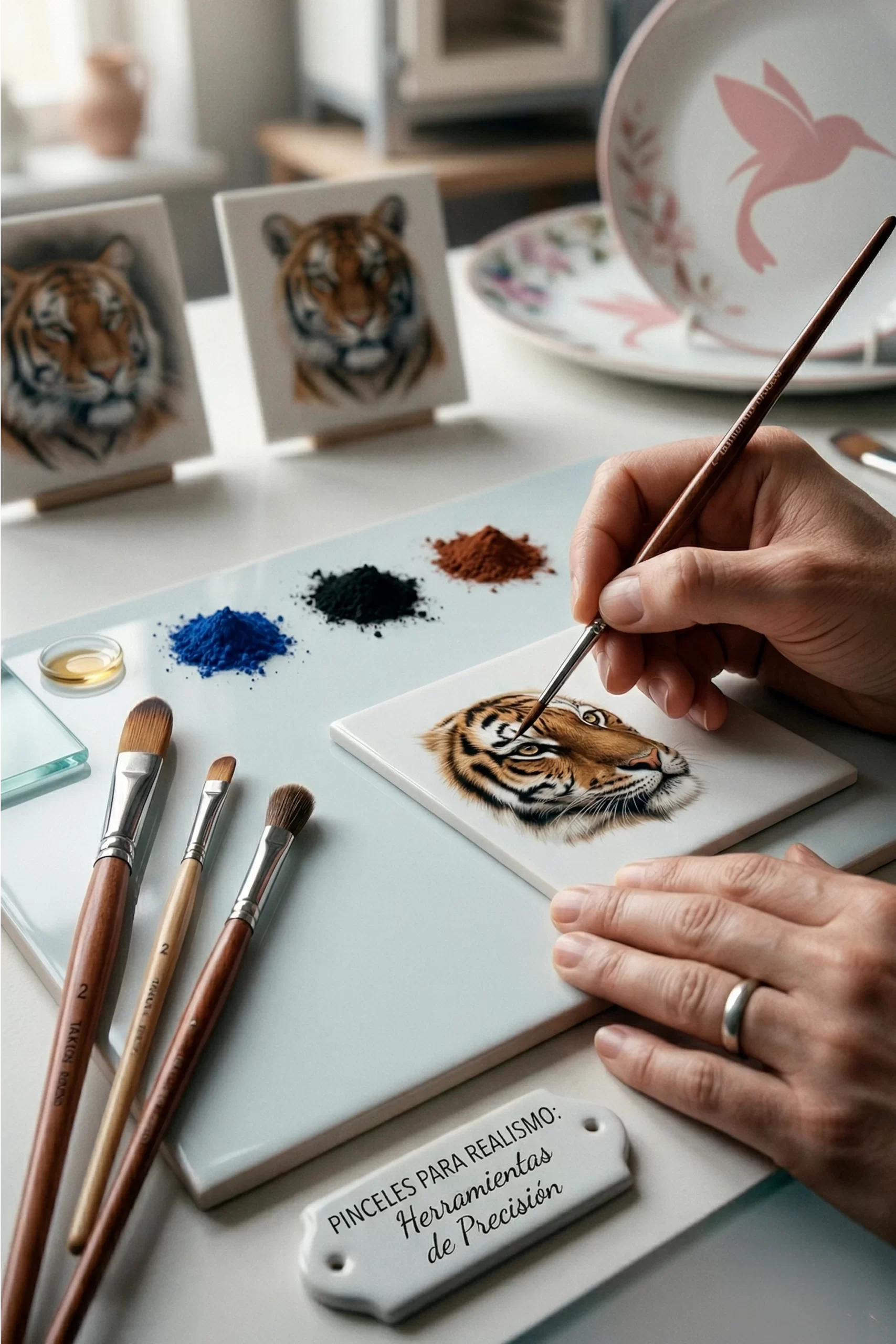
In the art of porcelain, the brush is not simply a tool, but a direct extension of the artist's intention. To achieve the level of detail and smoothness that realism demands, choosing the right brush is as critical as the quality of the mineral pigments that we use. A low-quality brush can frustrate even the most talented stroke, while a precision tool responds to the most subtle touch, allowing for imperceptible transitions and minute details. In this space, I will guide you to understand what to look for in your bristle allies so that your talent flows unhindered across the white plate. One of the first technical decisions is choosing between synthetic bristles or natural hair. To work with heavy oils and techniques such as the oil in mole, High-quality synthetic fibers (such as Toray or gold taklon) are generally superior. These brushes maintain their shape and "memory" much better in the face of the material's viscosity, allowing for precise loading and unloading of pigment. When observing works that require complex textures like fur, You'll see that a synthetic wire with a good tip is essential to achieve total control over each filament.
You don't need dozens of brushes to get started in realism, but you do need the right ones. An optimal basic kit should include: extra-fine (000 to 2) round brushes for details and outlines; small flat or filbert brushes for filling in areas and blending edges; and perhaps a soft mop brush for blending very delicate transitions. The key is that each brush retains its original shape, allowing the patience that we cultivate in the stroke translates into an impeccable execution on the virgin piece.
In freehand realism, the tip is everything. When choosing a round brush, make sure that, when wet, the bristles come together into a single, sharp point, with no loose hairs. Also, look for brushes with good "snap"; this means that the bristles should be flexible but return to their original shape immediately after the brushstroke. This technical control is vital for achieving precise anatomical details, such as those we explored in the mastery of portraiture, where a millimeter of deviation in the gaze changes the expression of the work.
Discipline in the workshop doesn't end with firing the piece; it extends to the care of your materials. To ensure the longevity of your brushes, never let the paint dry on the bristles, especially if you're using fast-drying mediums. Wash them with mild soap and warm water after each session, shape the tips with your fingers, and let them dry horizontally. This maintenance habit is part of the discipline of observation and technical rigor that allows us to trust our tools for each new creation.
Choosing the best quality brushes is ultimately an investment in your own growth as an artist. A good brush allows you to focus on composition and volume, rather than struggling with an unresponsive tool. In our space, we select each tool with the understanding that only the best is suitable for creating timeless art. I invite you to explore our selection and discover how the right brush transforms the painting experience, turning each session into an act of fluidity, precision, and technical enjoyment.
Find here the answers to the most frequently asked questions I receive about this publication.
For realism with heavy oils (such as oil on mole), high-quality synthetic fibers are generally superior to natural hair. They maintain their tip and shape better in the face of the material's viscosity, offering greater control for minute details and precise strokes, although for very soft blending (such as in children's portraits) very soft natural squirrel or goat hair mop brushes can be used.
You don't need a huge amount, but it is vital to invest in 2 or 3 essential, high-quality brushes from the start. A good brand of fine round brush (size 0 or 2) and a small flat brush will give you better results and last longer than a cheap, low-quality kit, allowing you to enjoy the learning process without the technical frustrations caused by poor tools.
It's time to replace a brush when it loses its ability to maintain its original point, when the bristles splay out or become uneven. A worn-out brush prevents you from achieving the precision required for freehand realism, so it's best to remove it and perhaps use it for less delicate tasks such as mixing pigments or applying bases.
Absolutely not; you should have a dedicated and perfectly clean brush kit just for applying gold and precious metals. Mineral pigment residues or oils from conventional paint contaminate gold, dulling its shine and altering its color after firing. Maintaining this separation is a fundamental technical standard that we teach to guarantee jewelry-quality finishes on your pieces.
Join our Virtual Atelier and receive monthly reflections on the art of patience and exclusive oil painting techniques on mole.