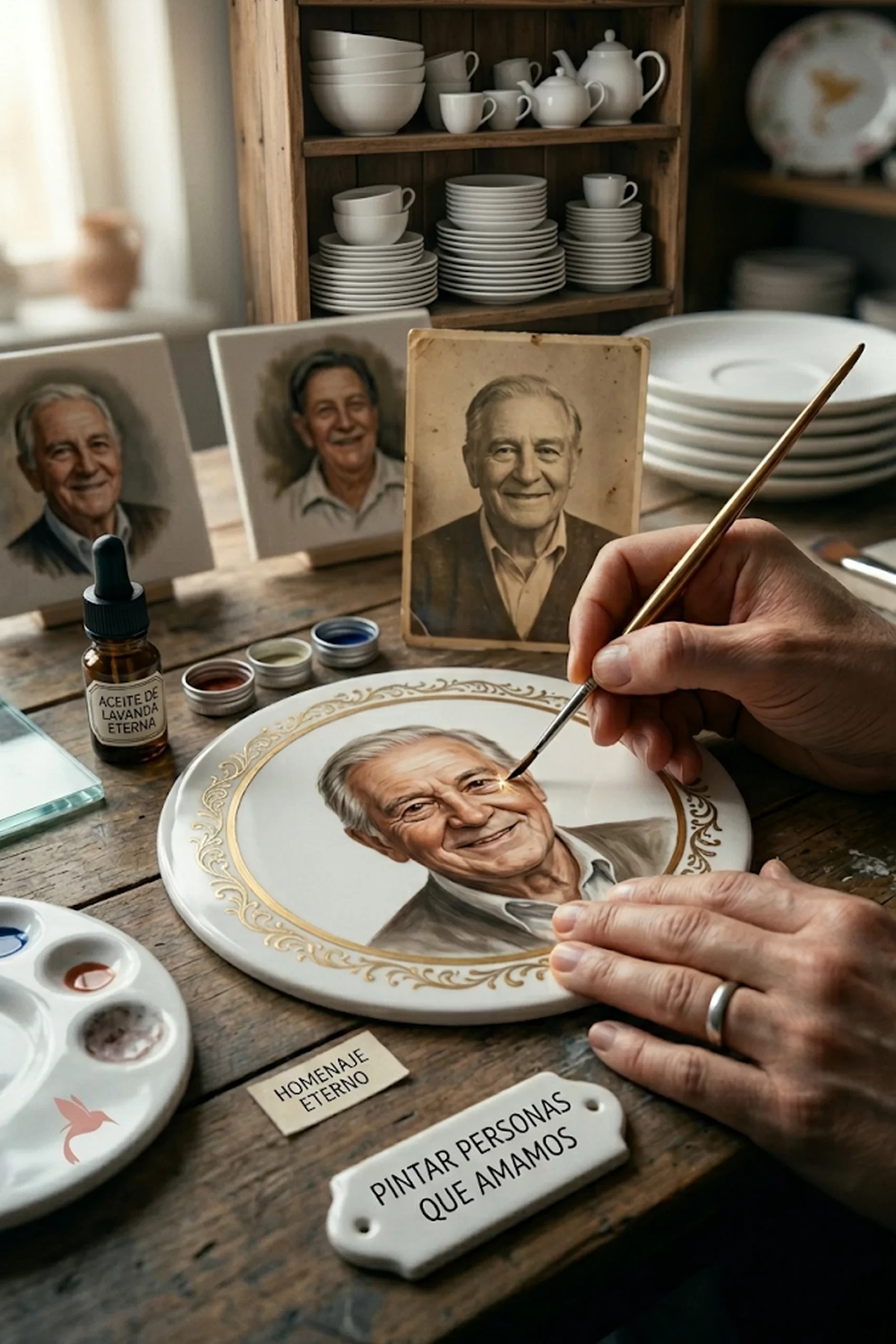
The adventure of painting a person we love, beyond technique and pigment, almost without realizing it, creates a sacred space where the brush becomes a bridge to embrace, remember, and celebrate the lives of those who marked our history.
Painting a loved one on porcelain is an act of love that transcends simple visual representation. When we decide to portray a father, a son, or a grandfather, we are not simply looking for a physical resemblance; we are trying to capture the light of their presence. At the Atelier, we understand that this type of work carries a unique emotional weight, where each stroke is a conversation with memory. It is here that the mastery of realism It is placed at the service of feeling, allowing us to create an object that not only decorates, but also safeguards a piece of our soul. When we paint someone we love, our discipline of observation It transforms. We no longer just see anatomy; we see stories. That tiny wrinkle when smiling or the specific tilt of the head become sacred traits we want to protect. By working with the skin tones, We seek the exact warmth we remember from their hands or their embrace. This deep connection with the model is what motivates us not to settle for the superficial, pushing us to seek technical excellence to do justice to the person portrayed.
The Gaze as a Point of Reunion
In a tribute portrait, the gaze This is the moment of truth. For those eyes to recognize us from the porcelain plate is a process that can be profoundly healing. By painting the iris and the sparkle of someone we miss or admire, we are, in a way, bringing their essence back into the present. In our sessions, the workshop often falls silent when a student manages to "find" the gaze of their loved one; it is a magical moment of reunion that only art, with its ability to stop time, can facilitate.
The Ritual of Creation and Mourning
As we explored in our post about art as an act of healing, Painting a tribute can be a powerful tool for transmuting pain into beauty. The slow process of porcelain—the multiple firings, the waiting for the kiln, the care of the materials—functions as a ritual of accompaniment. Each layer of paint is a step toward acceptance and gratitude. The portrait ceases to be a technical task and becomes a vessel of resilience, where the kiln's fire vitrifies not only the pigments, but also our love and respect.
Porcelain as a Family Heirloom
Unlike a piece of paper that yellows or a digital photo that can be lost, a porcelain portrait is a promise of permanence. We are creating a family heirloom that will be passed down, telling the story of who we were and who we loved. By using precious metals like gold By framing the face of a loved one, we are elevating that memory to the status of a treasure. It is an investment in the collective memory of our lineage, ensuring that the light of that person continues to shine with the same intensity through the centuries.
Your Story Written in Fire
I invite you to choose that photograph that holds special meaning and transform it into an eternal tribute. It doesn't matter if you feel you still lack technique; in the workshop, I will guide you with the sensitivity that this type of work deserves. Painting the people we love restores our ability to see beauty in the everyday and strength in what endures. Come and discover the transformative power of honoring your story, stroke by stroke, until the soul of your loved one shines with the nobility of handcrafted porcelain.
FAQs about Portraits as Tributes
Find here the answers to the most frequently asked questions I receive about this publication.
Is it more difficult to paint someone you know than a stranger?
Yes, emotionally it is more demanding because our brain knows every detail of the face and we are more critical of the result. However, that same demand is what leads us to pay more attention to the nuances of expression and gaze, often resulting in works with a charge of realism and emotion that a portrait of an unknown model would hardly achieve.
What happens if I get excited and can't continue painting?
At the Atelier we respect the emotional timing of each student; the art of waiting also applies to the heart. If a tribute portrait session becomes too intense, we allow the piece to rest. Painting on porcelain with slow-drying oils gives us the flexibility to resume work when we feel ready, understanding that the healing process is just as important as the completion of the piece.
How do I choose the best support for a portrait that I want to inherit?
For a work of this sentimental value, we recommend a top-quality porcelain plaque, preferably flat and very white. As we saw in the post about the perfect support, The purity of the material ensures that the colors remain vibrant and that the piece withstands the multiple firings necessary to achieve the extreme realism that a tribute requires.
Can a dedication be included on the back of the piece?
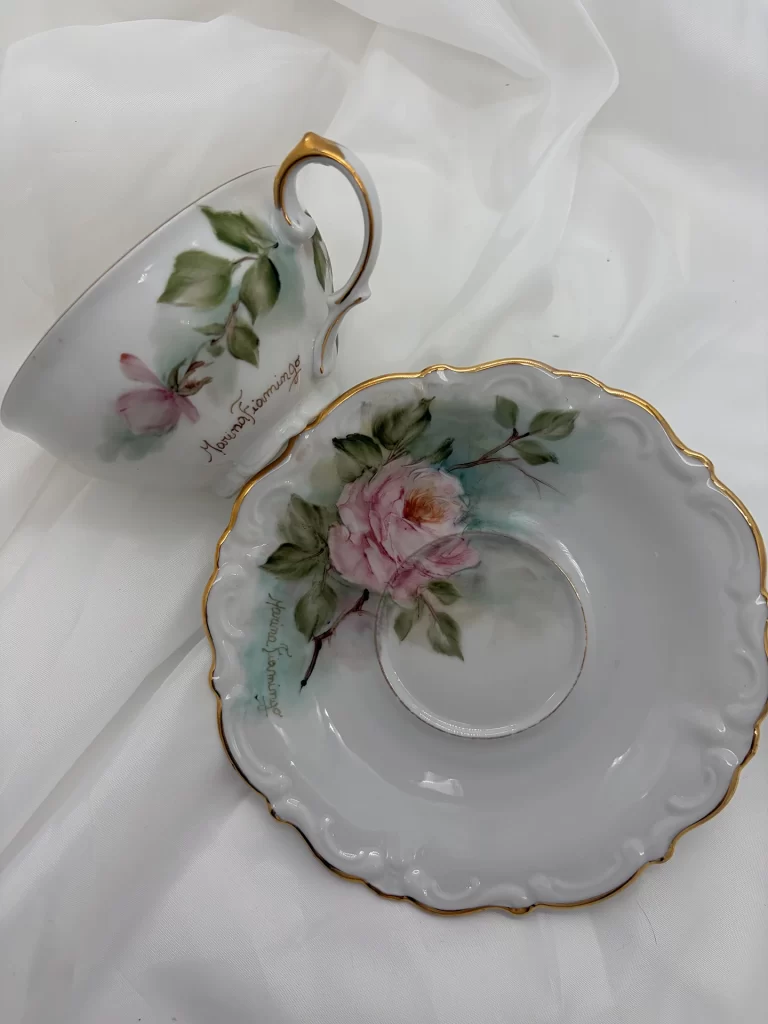
Absolutely! It's a very common and beautiful practice to write a message, a date, or the person's name with a pen and ink on the back. This inscription is burned along with the artwork, becoming permanently vitrified. It is the final touch that transforms the object into an unalterable historical and sentimental document, closing the circle of tribute with a personalized signature.
Display currency was reset to the store default because the selected currency would show amounts as zero. Please update the exchange rate and Number of Decimals in Multi Currency settings.