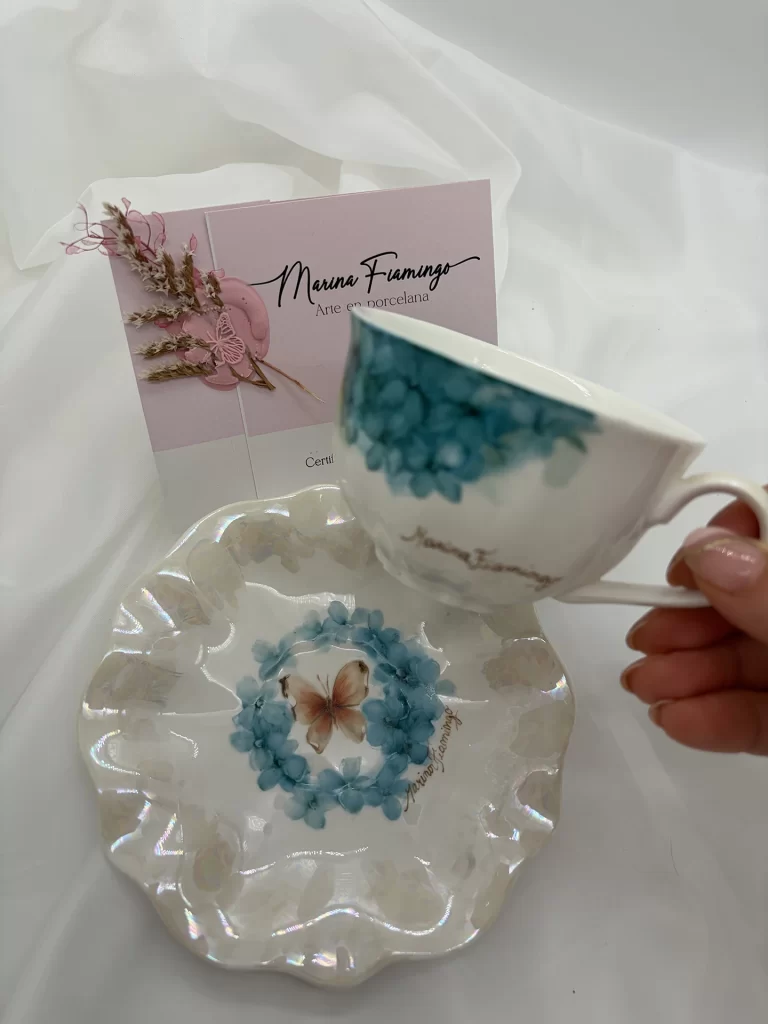


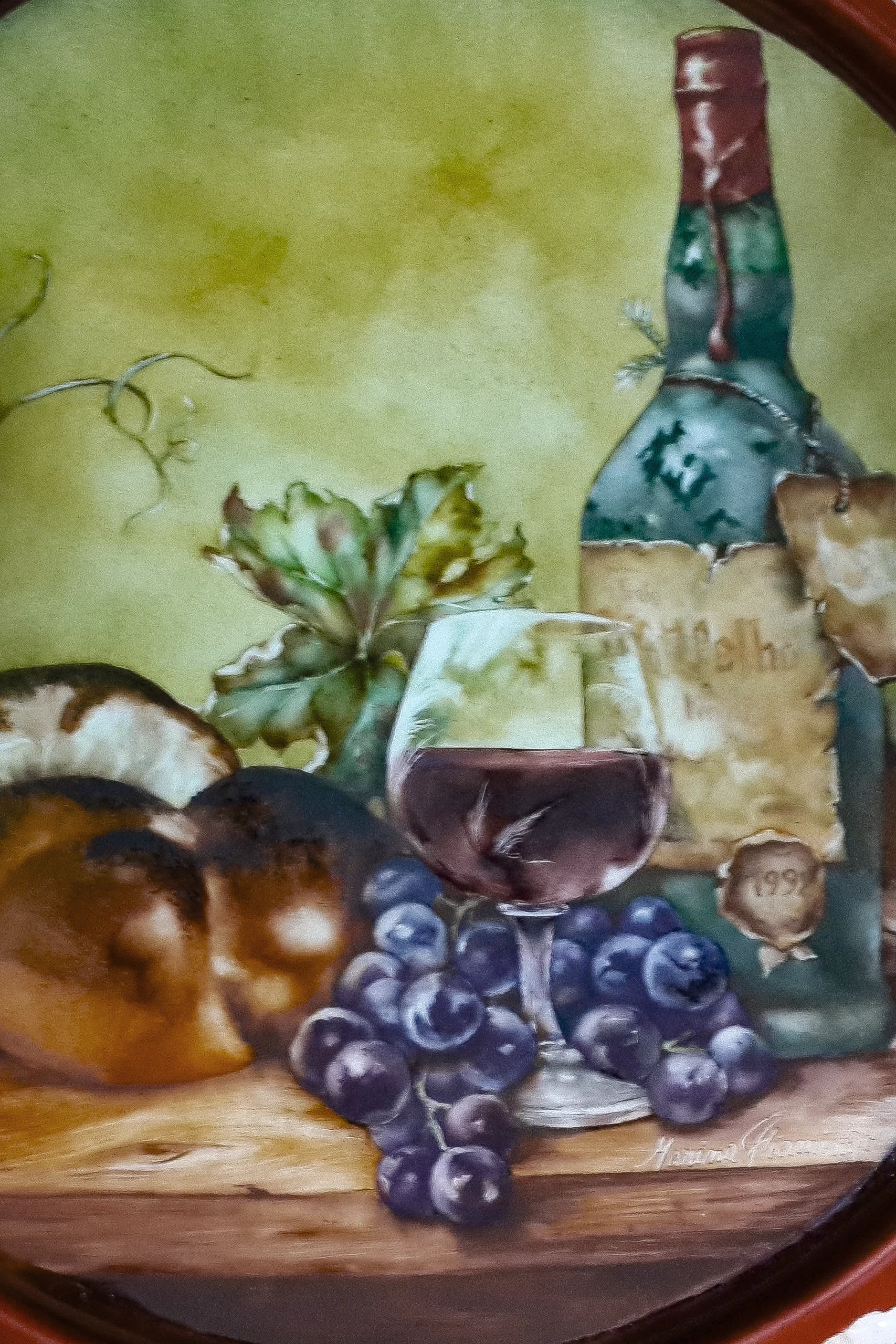

The painting doesn't end with the first stroke; it builds in the air between layers of color and fire, achieving a three-dimensionality that seems to breathe beneath the glaze. In this way, we begin to develop the skill of creating depth in porcelain.

Author and creator.
Mastering glazing is reaching maturity in porcelain painting. While opaque paint seeks to cover, glazing seeks to reveal. It is a transparency technique where we apply layers of color so thin that light can pass through them, bounce off the white of the plate, and return to the viewer's eye laden with nuances. In the Atelier, this is the fundamental tool for achieving extreme realism: we don't paint a shadow, we "build" it, firing after firing. It is a process of patience and rigor that transforms a flat surface into a window with infinite depth. In handcrafted porcelain, the white of the support is our most powerful light. The glazing technique consists of not smothering that light with thick layers of pigment. When using vehicles and smooth flow oils, We achieved a color that was almost a colored shadow. This transparency is what allows the viewer, when observing a face or a flower, to feel that there is "something more" beneath the surface, a vital vibration that can only be achieved by respecting the nobility of the base material and the purity of the mineral pigments.
One of the wonders of glazing is "optical mixing." Instead of mixing all the colors on the palette, we apply a pure color, burn it into the third cooking, and then we apply another transparent color on top. The human eye blends both tones, creating a chromatic richness impossible to achieve with a single physical mixture. This is how those vibrant purples or deep greens that define the botanical realism of Marina Fiamingo, where nature seems to overflow the plaque.
Layers allow us to masterfully control perspective. The first glazes are usually for backgrounds and distant atmospheres, using cool tones that visually recede. As we add layers and burn-in, we move closer to the foreground with warmer, more defined details. nib and gold. This technical layering is what creates the sensation that the painted object has a real volume, allowing the shadows to have "air" and the lights to have a brightness that seems to emanate from within the porcelain.
If there's one area where glazes reign supreme, it's in the portrait painting. Human skin is a complex system of layers, and to imitate it, we must work in the same way. A first glaze for the base tone, a second for the pink undertones and subtle veins, and a third to unify and soften. Each pass through the flame consolidates the previous layer, allowing us to work on top without fear of "dirtying" the color. This resilience in the process It is what gives the gaze that depth that excites us so much when we open the oven.
The greatest challenge of this technique is knowing when the work has reached its full potential. One too many layers can obscure the transparency achieved, and one too few can leave the piece lacking the necessary strength. In the workshop, we encourage the discipline of observation to evaluate each firing with a critical eye. The final glaze is often a caress of color that harmonizes the entire piece, the master touch that unites the technical with the spiritual. I invite you to discover this path of slow construction, where each layer is another step towards the artistic excellence that only designer porcelain can offer.
Find here the answers to the most frequently asked questions I receive about this publication.
A glaze is an extremely thin, transparent layer of paint applied over a previously painted and fired (vitrified) surface. Its function is not to conceal what lies beneath, but to modify its tone or saturation, creating a visual depth that mimics the way light passes through real objects such as flower petals or human skin. It is the key to transforming a flat painting into a work with realistic volume.
It is not recommended if maximum realism is desired, since applying a new layer of oil over fresh paint would physically mix the colors on the plate, losing transparency and sharpness. The essence of glazing lies in allowing light to pass through a solid, vitrified layer to reach the next. Burning between layers ensures that each hue remains in place, allowing for a depth that no direct mixing can match.
The key lies in the choice of mop brush and in the oil's fluidity. Once the glaze has been applied with a flat brush, a very soft-bristled brush should be used to blend the paint while it is still wet, removing any trace of the tool. Using slow-drying oils gives us the necessary time to work the surface until it is perfectly smooth and transparent before firing.
Absolutely! Glazes are excellent tools for tonal correction. If an area is too warm or vibrant, a very thin glaze of a complementary or cool color can "tone down" or harmonize that area without having to erase the previous work. This fine-tuning technique allows the artist to have complete control over the atmosphere of the artwork right up to the final burn, ensuring a balanced and professional result.
Join our Virtual Atelier and receive monthly reflections on the art of patience and exclusive oil painting techniques on mole.