How to Choose the Perfect Photo for Your Portrait? The quality of your final work begins long before you touch the brush; it starts the moment you choose the image that will serve as a map for your talent.
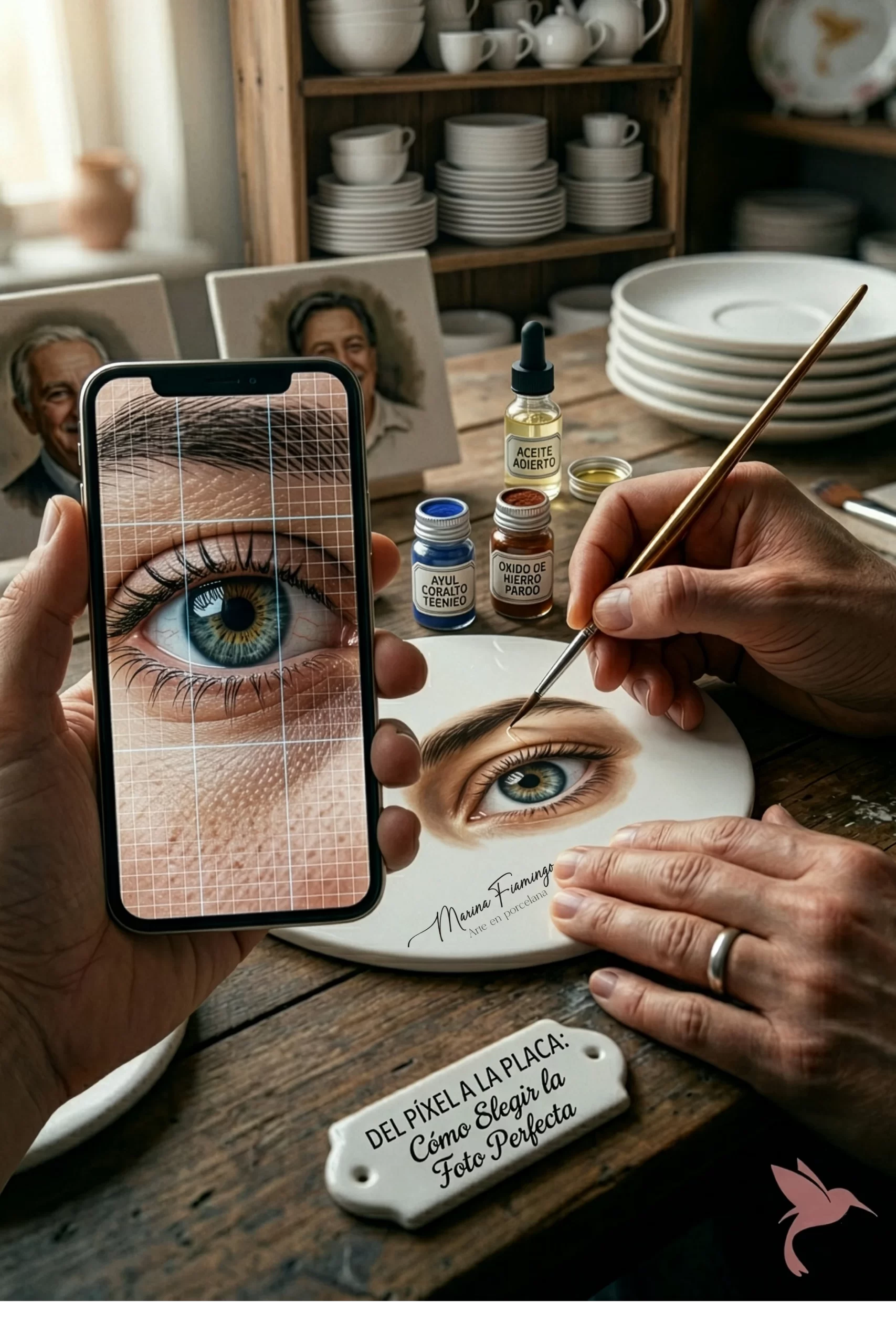
In the digital age, our muse often lives on a phone screen, but not every photograph is suitable for being immortalized in porcelain. To achieve impactful realism, we need a reference that speaks to us clearly. Painting a portrait is a process of visual translation, and if the original message (the photograph) is "blurry" or lacks nuance, the final translation will lose its soul. At the Atelier, we dedicate sacred time to image selection, understanding that a good photograph is the 50% of a mastery of realism Successful. To paint every pore, every eyebrow hair, or the subtle glimmer of a tear, we need to see them in the reference. A low-resolution, pixelated, or out-of-focus photo forces us to invent, and in realism, unfounded invention often strays from the subject's identity. When choosing your photo, zoom in on the eyes: if you can clearly see the details of the iris and eyelashes, you have a technical goldmine. This clarity is what will allow you to use your precision brushes with the confidence of someone who knows exactly where the line is going.
Light: The Great Sculptor of the Face
The most common mistake is choosing photos with a front flash or very flat lighting that "erases" the features. For a portrait to have volume and not look like a sticker on porcelain, we need shadows. We look for photos with side or overhead lighting that define the bridge of the nose, the depth of the eye sockets, and the jawline. These shadows are what allow us to play with the skin tones and transparencies, creating that three-dimensionality that makes the viewer want to reach out and touch the piece.
Composition and Angle of Gaze
A good portrait tells a story through its framing. Sometimes, a tight close-up that focuses solely on the eyes is much more powerful than a full-body shot. We must observe the direction of the head and shoulders; slightly tilted angles tend to be more dynamic and natural than rigid frontal shots. When applying the anatomy and proportion, A photo with an interesting angle gives us the opportunity to demonstrate our technical skill, turning the porcelain plate into a window into the personality of the person portrayed.
The Emotional Connection with the Model
Beyond megapixels, the photo must vibrate. If we are painting a tribute to a loved one, The captured expression must be the essence of that person. We seek authentic gestures, sincere gazes, and genuine smiles. That emotional connection is the driving force that sustains us through long hours of work and countless burns. When the artist is enamored with the subject, patience flows, and the brush seems to move on its own, guided by the desire to do justice to the beauty of that memory.
Reference Preparation: Paper vs. Screen
In the modern workshop, we often work with tablets that allow us to instantly zoom in on details, but having a high-quality print on hand is also vital for comparing colors. Preparing the image—perhaps adjusting the contrast slightly or converting the photo to black and white to better understand the light values—is part of the discipline of observation. Ultimately, the photograph is the map, but you are the guide. With a good reference and the right technique, the transition from digital pixel to vitrified plate will be a journey of pure enjoyment and artistic excellence.
Frequently Asked Questions about Pixel to Board
Find here the answers to the most frequently asked questions I receive about this publication.
Is it possible to paint a portrait from an old or damaged photograph?
Yes, it is possible, but it requires a higher level of mastery since the artist will have to "fill in" the missing information based on their knowledge of anatomy. In these cases, we usually recommend working in sepia or monochromatic tones to disguise the lack of detail and focus on the atmosphere and overall resemblance, turning the limitation of the photo into an aesthetic decision of vintage style.
Is it better to use a color photo or a black and white one as a guide?
For beginners, a black and white photo is ideal for understanding light and shadow values (volume) without the distraction of color. Once the structure is mastered, moving on to the color reference allows you to work on the complexity of the skin tones. In the Atelier, we often use both: the black and white one to ensure the resemblance and the colored one for the final chromatic richness.
How important is the background of the original photograph?
In most of the artist's portraits, the background of the original photo is discarded or simplified so that it does not compete with the face. However, the colors of the original background can influence skin reflections (ambient light). It's important to decide before starting whether we're going to use a neutral background, a soft gradient, or integrate elements of botanical realism to frame the portrait.
Are photos taken with a cell phone suitable for creating a realistic portrait?
Yes, modern cell phones have excellent cameras, as long as the photos are taken in good natural light (near a window, for example) and without filters that smooth the skin. Social media beauty filters often remove the shadows and textures we need to paint realism, so we always ask for the most "raw" and natural photo possible to capture the true essence of the person.